
A big hello, and thanks to those of you who have found your way to this corner of the internet! I’m Lady Kaie and this is my first time writing for Myths and Mischief! Today we will be tackling Sexism in Greek Mythology.
For the purposes of this piece, let’s begin with a basic description of sexism. According to our good friend google, Sexism is:
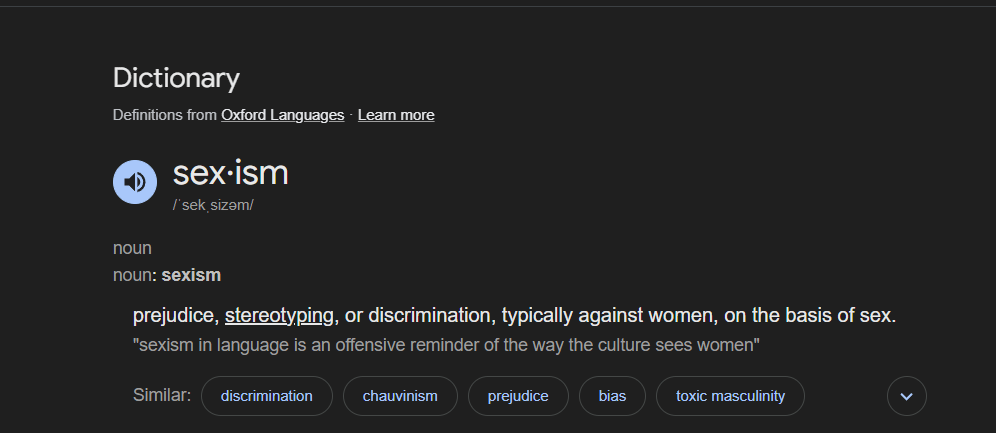
(taken from google: Search sexism)
Note how it says, “typically against women,” while beneath that, under the category of “Similar:” are the words “toxic masculinity” in blue. That is important as we will not only be focusing on sexism toward women, but men as well.
While sexism is far more nuanced than a twelve word definition and is a hot button issue in today’s current climate, this will not be a deep dive into all facets of how sexism has touched the Greek Pantheon. Instead, we will take the time to visit three of Greece’s mistreated Gods and Goddesses, and perhaps change the lens through which we view them and how they have been viewed by others over the years.
Contemplating the topic of sexism and being a woman, most would think that my obvious choice of individuals to discuss would be the Goddesses. However, I’ve always enjoyed flipping the script. One God in particular called out to be heard.
Hephaestus, God of Blacksmiths, Craftsmen, fire, the forge and more.
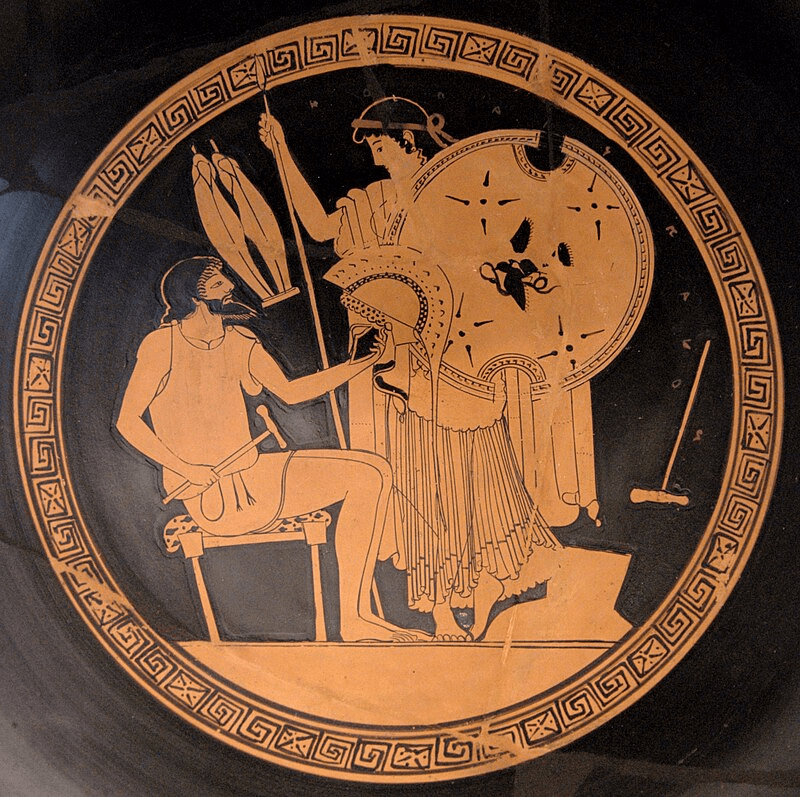
(Image from Wiki: Hephaestus)
Most of his life he had been neglected in some form or fashion, from his own mother casting him off of Mount Olympus due to an undesired birth defect and then ignored and cheated on by his wife, Aphrodite.
Within the vast realms of the internet and countless websites (thanks Wiki) there are other stories to explain his ‘lameness’ but the result is still the same. He was not perfect, and therefore, not desirable even to his own mother. According to Wiki, the story of how he married Aphrodite was due to a bargain made with his mother to release her from the imprisonment he put her in (wikipedia). Before diving into Hephaestus’ marriage to Aphrodite, let’s visit the trauma he experienced just for being born in a body that wasn’t acceptable in the eyes of the woman who birthed him.
From the get go, Hephaestus was not born perfect and because of this, Hera cast him from her sight and from his home by throwing him down Mount Olympus and into the mortal realm. Why? What was so wrong with him?
The beloved God of Blacksmiths and Craftsmens was born with a deformity. Two of his epithets are as pictured below:

(Image taken from Wiki: “Hephaestus”)
Surely, the historians can surmise that Hera didn’t cast him out because she didn’t want a child. Her other children hadn’t been cast out, only Hephaestus. Knowing that the Gods are vain creatures, we can quickly deduce that baby Heph was thrown away because he was not born as “he should have been”. From the start she discriminated against him for something that he could not help and cast him aside because of it. Hephaestus could never have lived up to being a ‘perfect’ image of what a God should be in her eyes or the others for that matter.
Because he was not perfect and because he would never be the type of ‘man’ that was desirable in those times (and in today’s time too, we haven’t evolved that much), he was unworthy. He could never fit into the stereotypical mold of a ‘man’ much less a God. Which brings up his marriage to Aphrodite.
The Goddess of Love, who married Hephaestus due either to a deal made with Hera for her freedom, or because Zeus wished to tie her down with someone so that she would stop creating conflict amongst the other Gods fighting for her attention (Wikipedia). Either way, he was given a marriage that failed due to her affair with Ares. Breaking down the inherent sexism caught up in this love triangle is astounding…
Ares, our perfect strong God of War! The epitome of male perfection with stunted emotions and a tendency for violence, caught red handed with the Goddess of Love and Desire, who could for all intents and purposes be considered a slut. After all, Heph caught them, punished them and put their actions on display for all of Olympus to see (Wikipedia). You know, how a jealous, insecure, bitter husband would! No one wins in this story, and while Aphrodite is undoubtedly considered the horrible one in all of this because she stepped out on her husband (and its always the woman’s fault = sexism at its finest), all three were victims of circumstance.
Aphrodite never wanted to marry Hephaestus but was used as a pawn by her own family for their personal gain. Ares, who is the poster boy for toxic masculinity, undoubtedly had true feelings for Aphrodite because he is linked to her through numerous stories, but could he express them? Then Hephaestus, poor and lame, sought his revenge and stood out as a bitter, broken man who demanded back the dowry he paid because his wife cheated.
Now, I said that I would talk about two other Gods/Goddesses, and as I fell into this sordid tale of love gone wrong, it hit me.
Poor Aphrodite and Ares! Of course the God of Blacksmiths and Craftsmen is a prime example of sexist discrimination based on being an “inferior” male, but it’s impossible not to consider the harm that all of this did to Aphrodite and Ares as well.
There is rarely one victim in a situation where others (*cough* Zeus) are controlling the game. Which is another facet of sexism that played against these three. Heph was less than, and the other Gods considered themselves superior, therefore they felt that they could dictate what happened to and around him.
Now, let’s look at Aphrodite. Our Goddess of Love and Beauty. The homewrecker! She who should be shamed! Don’t forget that she should also be happy because she was the most beautiful and desired Goddess. Pretty women don’t get to feel bad about themselves because they have everything, don’t ya know! *Puts away soap box*
Anyway… back to Aphrodite.
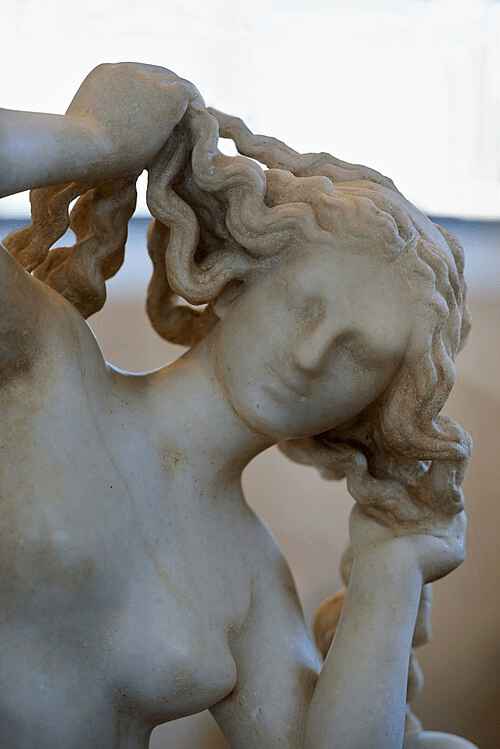
(Image taken from Wikipedia: “Aphrodite”)
The Goddess of Love was nothing more than a pawn for the hierarchy to get exactly what they wanted in the story of her marriage to Hephaestus. In one tale, her husband even uses her as a bargaining chip! Yes, Hera agreed to give the Goddess of love to Hephaestus, but technically it was he who insisted on her hand in marriage to free his mother (Wikipedia). Even to the God, who was supposed to love her, her autonomy was completely disregarded, which ties into numerous sexist ideals where women are inferior and treated as second class citizens for those in power.
In the other tale of how she married Hephaestus, once more it was not her choice to do so. Mr. Olympus himself, Zeus, determined that she was a nuisance who pitted the other gods against one another (Wikipedia). Therefore! He used his authority to put her in an arranged marriage for his own peace of mind. The Goddess of Love was put into a loveless marriage because she was a means to an end for those who outranked her.
Don’t get me wrong, Aphrodite isn’t innocent, and neither is Hephaestus, but we can see how the inherent sexism rampant in the pantheon affects both individuals and how they also perpetrate it.
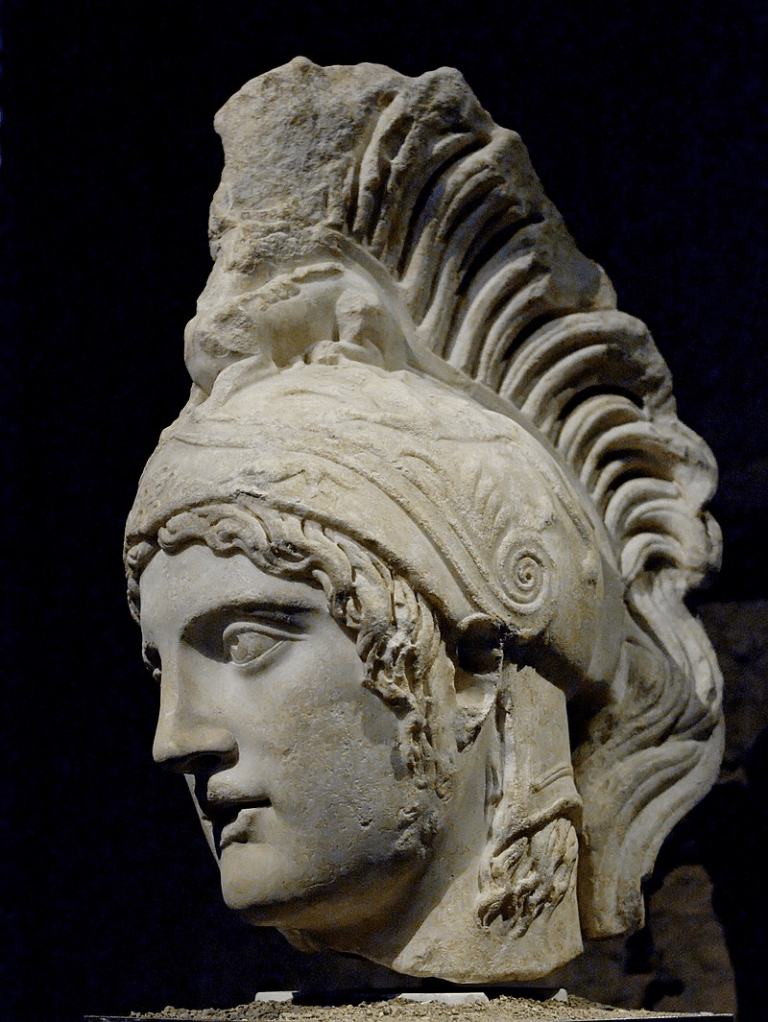
(Image taken from Wiki: Ares)
In relation to Ares, God of War, the interest I harbor for his character arc is more philosophical in nature. According to Wiki, he was noted as being humiliated quite frequently. The God of War and brutality, the shining example of what a man and warrior were supposed to be, and he was merely tolerated by his brethren. Even by Hephaestus, one who was not man enough due to his defect, Ares found himself the center of ridicule.
Aphrodite herself used him in the Trojan war, of which he lost to his sister, Athena who was revered for her prowess on the battlefield. Athena was also revered on Olympus, where Ares was treated with indifference (Wikipedia). Humiliation, bred for war and destruction and barely tolerated by his family, what joy could there have been for the poor God?
Was his overstated masculinity truly satisfying for him? Or was it what kept him from finding a community on Olympus? These are not questions that can be answered, however they can provoke thought.
Being flawed beings, as the Gods were also flawed, we too have the tendency nowadays to preach against something and then commit the crime of supporting it with our words or actions.
When I took this topic, I was bound and determined to attack the injustice of sexism in relation to the Greek Gods and Goddesses. Through writing theories of sexism based on Hephaestus’ story, Aphrodite and Ares demanded to be considered in a new light.
A final bit of food for thought, is that characters are never one dimensional. Therefore it is imperative that our thoughts and perceptions not be either, lest we find ourselves trapped in lazy, dangerous thinking.
As one of my professors once told me, question everything, dear readers. Go forth with your curiosities…
See you soon.
————————————-
“Aphrodite.” Wikipedia, Wikimedia Foundation, 16 Oct. 2025, https://en.wikipedia.org/wiki/Aphrodite.
“Ares.” Wikipedia, Wikimedia Foundation, 16 Oct. 2025, https://en.wikipedia.org/wiki/Ares
“Hephaestus.” Wikipedia, Wikimedia Foundation, 16 Oct. 2025, https://en.wikipedia.org/wiki/Hephaestus.
 Myths & Mischief
One response to “Sexism in Greek Mythology”
Wikipedia is a terrible source for mythology because it often cites encyclopedias, which themselves do not cite anything. The amount of times I’ve tried to track down a “version” of a myth that did not exist is, frankly, absurd. If you must use a database, use Theoi. It’s also not entirely reliable, but it at least has direct sources from antiquity.
LikeLike