
Running at 100 kilometers per hour ( 62 mph ) is no easy feat – well, it’s virtually impossible. Even for the illustrious Usain Bolt, who capped out at a whopping 44.7 km/h ( 27.8 mph ) at his legendary, world record-setting 2009 100-meter race, which he completed in just 9.58 seconds. So, yes – so sorry to burst any bubbles, but it’s best to give up any dreams of ever reaching such speeds, if you had them, that is. But, luckily, there is a way to witness someone, or rather something, reaching those insane feats in clear view, if Japanese urban folklore is anything to go by. And such a phenomenon directly inspired the anime/manga series currently taking the world by storm – DanDaDan!
Only airing its first season last summer and currently airing its second, DanDaDan is a breath of fresh air for the overall anime and manga community. With a healthy mixture of shonen nonsense and eccentricities, shojo romance and the supernatural in nearly all its forms, it brings fans of various genres of anime, or otherwise, to witness the story it means to tell. And, featured in its growing cast is the immensely powerful spirit, a modern Yokai, Turbo Granny, who – as one might easily guess – runs at unimaginable speeds, chasing down the unfortunate souls who happen across the tunnel in which she resides. One such victim is the main male protagonist of the series, Takakura Ken, or Okarun, an inventive nickname given to him by his female protagonist counterpart, Moyo Ayase.
DanDaDan
Created by Yakinobu Tatsu, DanDaDan is, as briefly mentioned before, an amalgamation of different genres found throughout modern fiction, with themes ranging from the supernatural, adolescence, humor, and light horror. It mixes the otherworldly unknown of aliens and earthly superstitions, tapping into both futuristic anxieties and old-world horrors, while including the mysteries conjured up in today’s modern world. And, while within the series there are many foes inspired by various mysteries and conspiracy theories, Turbo Granny is the first we meet.
It wasn’t by accident either, for Okarun and Momo made a bet in an effort to prove the other wrong in their beliefs of aliens and ghosts, respectively. And they were both proven to be correct that night, Momo having been attacked by a trio of aliens in search of human reproductive parts, and Okarun, by the illustrious legend of the Shono City tunnel, resulting in Momo awakening her latent spiritual powers and Okarun getting possessed by the Yokai.
Turbo Granny – Violent, Vulgar, and Weirdly Endearing…
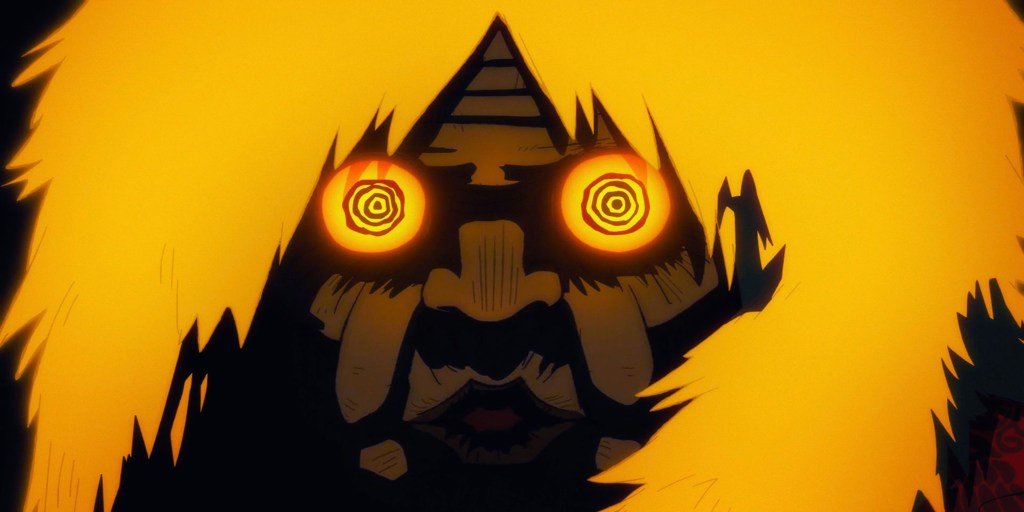
Initially taking the form of a foul-mouthed elderly woman with reddish-brown, wrinkled skin, directionally averting eyes, and a mane of white, shaggy hair that could rival that of the great Jiraiya of the Hidden Leaf, Turbo Granny in concept is not new in the anime sphere. As, in many, a fast-running specter residing amongst abandoned tunnels is quite the recurring phenomenon, but rarely is the entity fully fleshed out as a character like our crude, violent, mischievous, and often endearing, Granny. After her consciousness is transferred and sealed into a maneki-neko doll, her character evolves from the main antagonist in the first arc of season 1, to that of a kind of mentor for the teens coming into their powers.
And, while the most unmistakable inspiration for Turbo Granny would be Turbo Baa-chan, there are various other legends from which Yukinobu Tatsu likely pulled threads of inspiration to inform the character in his series.
…And Her Folkloric Roots
Yama-Uba

Broadly known as Yama-Uba (or Mountain-Dwelling Witch), this Yokai is often depicted as a solitary old woman residing deep within the forested mountains of Japan, where she is said to devour travelers that happen upon her. But, in some tales, she is also known to raise lost or abandoned children, reminiscent of Turbo Granny’s inclination for comforting the spirits of young girls in the series. Within Turbo Granny you can see other threads of inspiration from the Yokai, wherein she changes from an advisory to someone Okarun and Momo often turn to for guidance, although it’s given reluctantly.
Onibaba
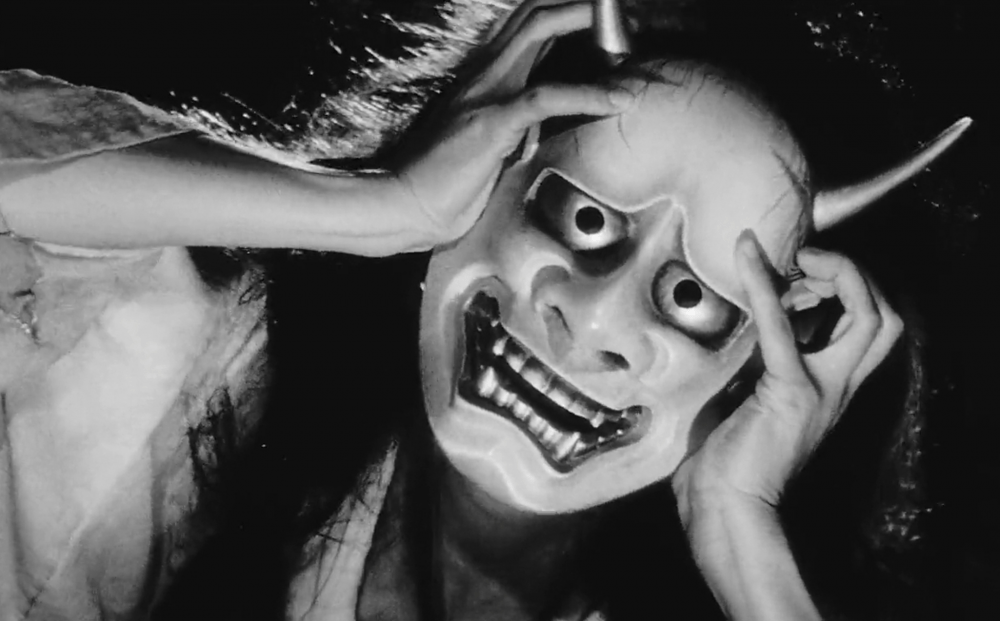
One of the localized iterations of the Yama-Uba is the Onibaba – or the Demon Hag, or Old Devil Woman – who remains one of Japan’s most infamously monstrous, yet tragic women throughout the cultures Folklore. Known to reside in the caves of Adachigahara, present-day Fukushima, Japan, and much like her Yama-Uba counterpart, Onibaba is often depicted within tales as a terrifying old woman that lures travelers and children to their doom, later revealing her demonic form and devouring them. Though in the most famous Onibaba tale, proving that evil can stem from the best intentions, Onibaba was driven to insanity following the murder of her daughter and unborn grandchild by her own hands, later transforming into a Yokai upon realizing that the decades spent in attempt to fulfill the task of finding a cure for another child’s ailment, by acquiring the fresh liver of an unborn fetus, ultimately led to the worst.
Aspects of her archetype show themselves within Turbo Granny in her grotesque, threatening, yet disturbingly human nature.
Turbo Baa-chan
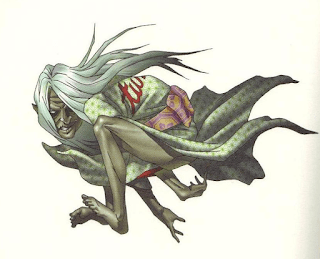
Known in modern Japan as the popular modern urban legend capable of running at impossible speeds, Turbo Baachan is, as previously mentioned, the most obvious and well-known inspiration for not only DanDaDan but also other anime, such as Mob Psycho 100, as well. Also referred to as the 100 km/hr Granny, she is said to race alongside cars to either overtake or terrorize them, oftentimes by tailgating, banging on windows, or causing accidents intentionally. The urban legend sparked many variants as it spread across Japan, including the “Roadside Granny”, or the “Ghost Car Variant”.
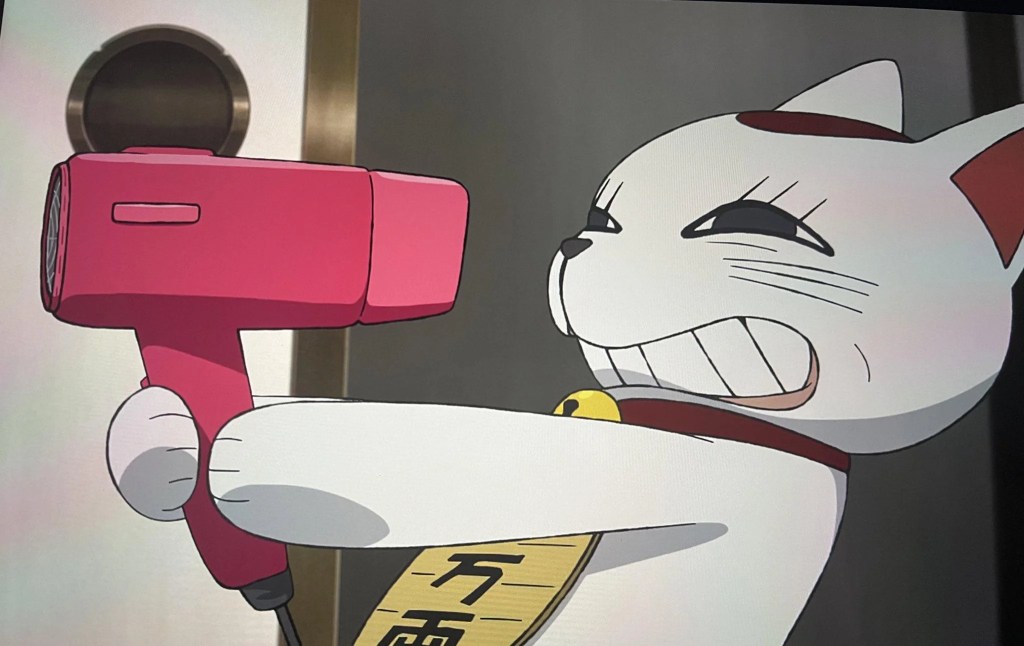
So, why does Turbo Granny resonate with fans of the series? Aside from the hilarity of the concept itself, it’s easy to grow fond of her the more you see how much depth is present in her character through her actions. And no, not when she’s threatening to kill someone, fighting, or calling someone useless or stupid, but instead with how much she cares beneath her hard exterior. That, and she’s simply too cute in her perpetually small, lucky-cat doll form.
Unfortunately, that’s all the time I have left today, but I hope that if you were only aware of one of the inspirations behind Turbo Granny, I was able to introduce you to other possibilities.
References Used :
Wiki, Contributors to Urban Legends. “Turbo Granny.” Urban Legends Wiki, Fandom, Inc., urbanlegend.fandom.com/wiki/Turbo_Granny. Accessed 1 Sept. 2025.
Matt. “Yokai.Com.” Yamauba | Yokai.Com, yokai.com/yamauba/. Accessed 1 Sept. 2025.
Matt. “A-Yokai-A-Day: Onibaba.” Matthew Meyer, 22 Aug. 2024, matthewmeyer.net/blog/2010/10/29/a-yokai-a-day-onibaba/.
Read, Tom. “鬼婆 (Onibaba) the Legend of the Demon Hag.” Curious Densetsu, 21 Sept. 2016, curiousdensetsu.wordpress.com/2016/09/01/onibaba-the-legend-of-the-demon-hag/.
Mitchell. “Urban Legends: Turbo Bachan.” Urban Legends: Turbo Bachan, 11 April. 2017, urbanfolkores.blogspot.com/2017/04/urban-legends-turbo-bachan.html.
Wiki, Contributors to Dandadan. “Turbo Granny.” Dandadan Wiki, Fandom, Inc., dandadan.fandom.com/wiki/Turbo_Granny. Accessed 1 Sept. 2025.
 Myths & Mischief
You must be logged in to post a comment.