
Hello and welcome to another Myths & Mischief post, reader! Marlo here. I was raised in the state of South Carolina, and like most Southeastern states, SC eats a lot of “soul food”. What I didn’t know growing up was that many of the traditional soul food dishes are of Native American origin. It’s true! And it’s a fascinating bit of American history. Oh, and not many content warnings here, but I’ll obviously be mentioning colonization, including intermixing between indigenous people and colonizers.
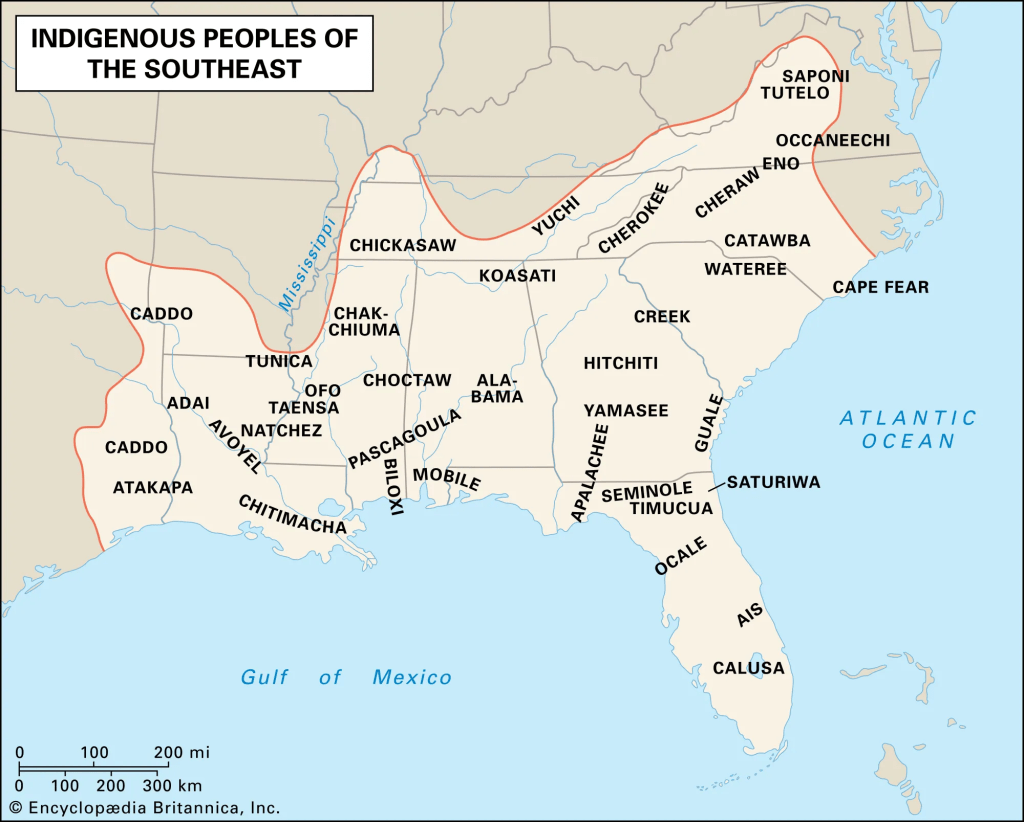
The region we now call the Southeastern United States, or the South, is about the same as the “Southeastern Woodlands”. This term describes a cultural region of Native Americans that existed prior to colonization and imperialism. The region stretches from Houston to Richmond, and from Miami to the Missouri Bootheel. Indigenous ethnic groups, tribes, and nations of this region include, but are not limited to, the:
- Apalachee (Abalahtsi)
- Biloxi (Tanêksa)
- Caddo (Kadawdáachuh)
- Calusa (Kaluśi)
- Catawba (Ye Iswą)
- Cherokee (Tsalagi)
- Chickasaw (Chikasha)
- Houma (Saktsi-Homa)
- Ittiwan (Etiwan)
- Jaega (Shega?)
- Mabila (Mobile)
- Maimi (Mayaimi)
- Natchez (Nashtseh)
- Nottoway (Natawewa)
- Opelousa (Apalusa)
- Pamlico (Pamtaku?)
- Pascagoula (Paska-Ogula)
- Sewee (Shuya)
- Timucua (Timúkwa)
- Tocobaga (Tokobaka)
- Waxhaw (Weksaka?)
- Yamasee (Yemasi?)
- Yuchi (Tsoyaha)
These peoples, other groups, and their ancestors have lived in the region for thousands of years. Through trade with each other and outside regions, they came to grow certain crops and rear various animals for food. They developed methods of cooking and made various dishes – each area and group with its own features. In short, the Southeastern Woodlands had a centuries-old set of culinary traditions by the times Europeans arrived, explored, invaded, and settled starting in the 1500s. Since the Europeans were unfamiliar with the land and the challenges it presented, they likely had little choice but to rely on indigenous traditions for survival.
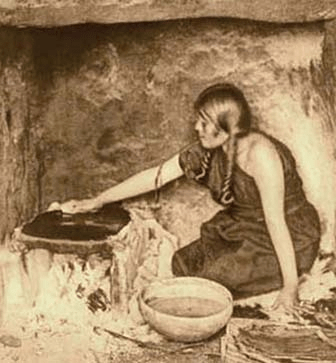
Furthermore, indigenous peoples mingled and intermixed with Europeans – and not always willingly. Thus, native cuisines inevitably had a large impact on the cuisine of settlers. The colonizers brought animals and crops of their own, of course, but native food was naturally adapted to the soils, weather patterns, and climates of the Southeast, and was much more plentiful than what the Europeans managed to bring over. Some key examples of indigenous ingredients include:
- Beans
- Blueberries
- Chili peppers
- Corn
- Muscadine grapes
- Pumpkins
- Raspberries
- Sassafras
- Squash
- Strawberries
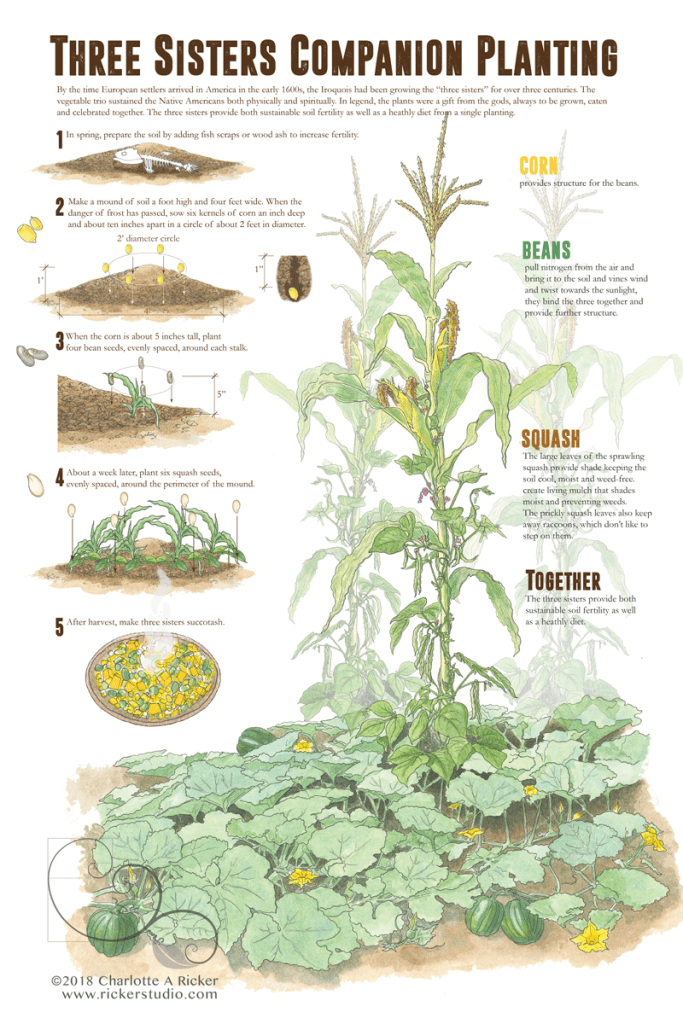
These ingredients were crucial for the survival of settlers and indigenous peoples alike. Especially important were the famous “Three Sisters”. This was a farming system in which corn, bean vines, and squash would be planted together on small mounds. The corn stalk serves as a trellis on which the bean vines can climb. The beans fix nitrogen, essentially meaning they secure vital nutrients in the soil. The large leaves of the squash shade the soil, keeping it moist and preventing the growth of weeds. This highly efficient method ensured food supply, and meant that these three crops were the core of many diets – settler and indigenous. Corn in particular was important. It, along with a process called nixtamalization that makes corn kernels easy to use in cooking, originally came from Mexico – long before colonization.
Native peoples of the Southeastern Woodlands hunted game such as:
Venison, or deer meat, was the most commonly-eaten, as white-tailed deer, Odocoileus virginianus, was and is still common. The rivers of what are now Alabama, Tennessee, and Mississippi contain the great richness of fish species in the country, and the peoples of the region have eaten plenty of fish for millennia.
Now, onto the good stuff: dishes. The following dishes have their roots in Native American food of the Southeastern Woodlands:
- Cornbread: a ubiquitous staple of Southern food, very often made sweet
- Hominy: nixtamalized corn kernels that are used to make grits, another staple food
- Hushpuppy: deep-fried balls of cornmeal dough – a popular side dish
- Johnnycake: a fried cornmeal flatbread , popular on parts of the Atlantic coast
Beyond these, barbecuing has its native origins in Florida and the Caribbean – the term itself coming from the word barbakoa of the Taíno language, native to the northern Caribbean islands. Chilli, originally from the Spanish chile con carne, is another indigenous dish originally from Mexico, not the Southeast.

Any given region’s culinary traditions evolve over time. The same is true for the Southeastern United States, where I have lived all my life. That’s why I find it so fascinating to learn about this indigenous history of my region’s delicious cuisine. Just writing this has made me hungry for some she-crab soup, chilli, and corn bread. I especially like when they put the corn kernels in the hushpuppies, too…
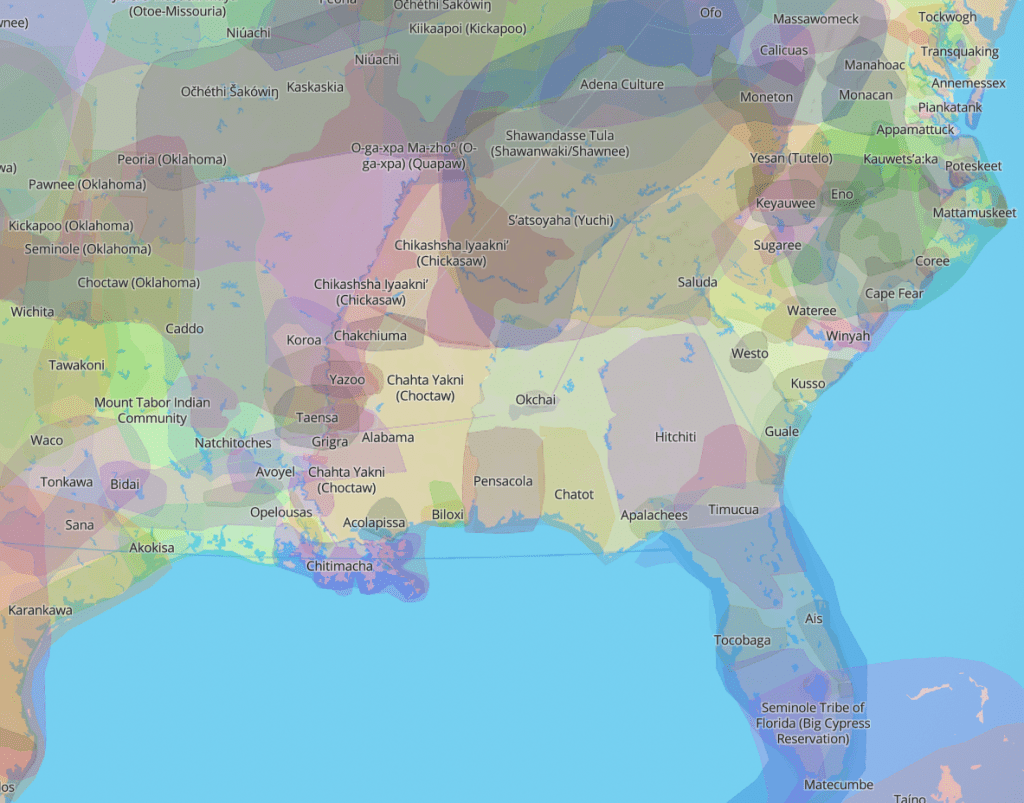
Anyways. I grew up on a native land with a native history and cuisine. I’m willing to bet you did, too. On a site called NativeLand.ca, you can look at the Americas, Australia, New Zealand/Aotearoa, and some other regions to see what native groups live or lived there. Take a look.
- References:
- https://native-land.ca/
- https://www.rickerstudio.com/three-sisters-companion-planting
- https://biodiversitymapping.org/index.php/usa-fish/
- https://indians.org/articles/corn-bread.html
- Hudson, Charles (1976). “A Conquered People”. The Southeastern Indians. the University of Tennessee Press.
- Dragonwagon, Crescent (2007). The Cornbread Gospels. Workman Publishing.
- Fogelson, Raymond D., ed. (2004). Southeast. Handbook of North American Indians, 14. William C. Sturtevant. Washington, D.C.: Smithsonian Institution.
 Myths & Mischief
You must be logged in to post a comment.