

The Myth Behind the Monster: Kurama and the Kitsune of Japanese Folklore
ENTER: LESLII, your resident anime interpreter of the incredibly talented Myths & Mischief team, and today I wish to chat with you about one of my favorite anime – Naruto. But not Naruto himself or the series overall, but rather the majestic DEMON FOX, Kurama, and the inspiration for his character.
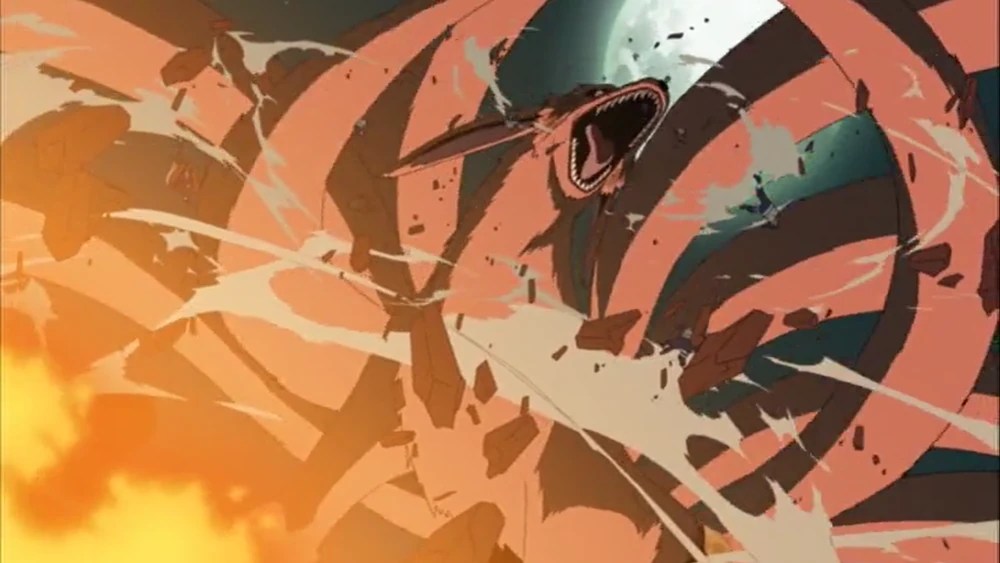
Naruto, one of the illustrious “Big 3”, as you may know, is known worldwide as one of the most influential anime/manga series worldwide, and it continues to be — as evidenced by the recent news that the series is the most watched anime of 2025 on Netflix — even after nearly 10 years following the sequel anime, Naruto : Shippuden’s, conclusion. Sufficiently named after its main character, the Naruto series introduces many aspects of Japanese culture to the unfamiliar, with myths, folklore, and religious teachings so heavily intertwined with the story’s identity, message and themes.
The story of Naruto initially follows a mischievous little boy cursed with the spirit of a demon fox, causing him to be ostracized by the village and left to his own devices to fend for himself from a young age. Before the story expands to new heights and explores other plot points, one of the foremost mysteries that drives much of the first series is that of Naruto and powers he’s been given. Many times we see glimpses of this fearful power, and we learn just how dangerous such powers can be if not controlled. We are also occasionally given glimpses of the source of such power – the demon fox that resides within him, Kurama, and overtime, as Naruto grows in strength with the help of Kurama’s chakra, both we and Naruto learn more about him.
As previously mentioned, Masashi Kishimoto – the creator of the Naruto Series – of course pulls heavily from his own cultures’ folklore and even spiritual or religious teachings. One such example is the aforementioned Kurama, who was created in reference to the iconic fox spirit of Japanese folklore and Shinto religion – the Kitsune, or Nine Tailed Fox – though not without a few differences.
Traditional Kitsune
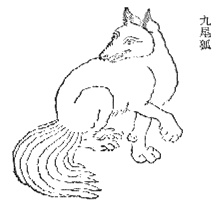
Fox Spirits are prominent figures found throughout East Asian mythology; most notably in Chinese, Korean and Japanese folklore and traditions. Following the spread of culture from China to Japan, the legend of the Chinese fox spirit – the Huli Jung – took root and evolved into the iconic Kitsune that is so recognizable today, becoming a central figure in Japanese folklore and Shinto religion. Much like the Huli Jing, they were either feared as mischievous tricksters or loved as servants and messengers of the Shinto God Inari, the deity of rice and fertility, bringing good news and fortune to the farming population of ancient Japan. The good natured Kitsune under Inari, known collectively as Zenko, were said to have the ability to possess those they were delivering messages to, through a process known as Kitsunetsuki. But, eventually, they moved on from being associated with Inari, becoming gods themselves, the highest and most righteous of them all being known as Tenko, or Heavenly Fox, representing the pinnacle of spiritual ascension and purity. Meanwhile the mischievous Kitsune, collectively known as Nogitsune, maintained the traditional trickster demeanor, becoming shapeshifters that seduced or tricked humans, oftentimes as punishment or for their own entertainment.
Kurama
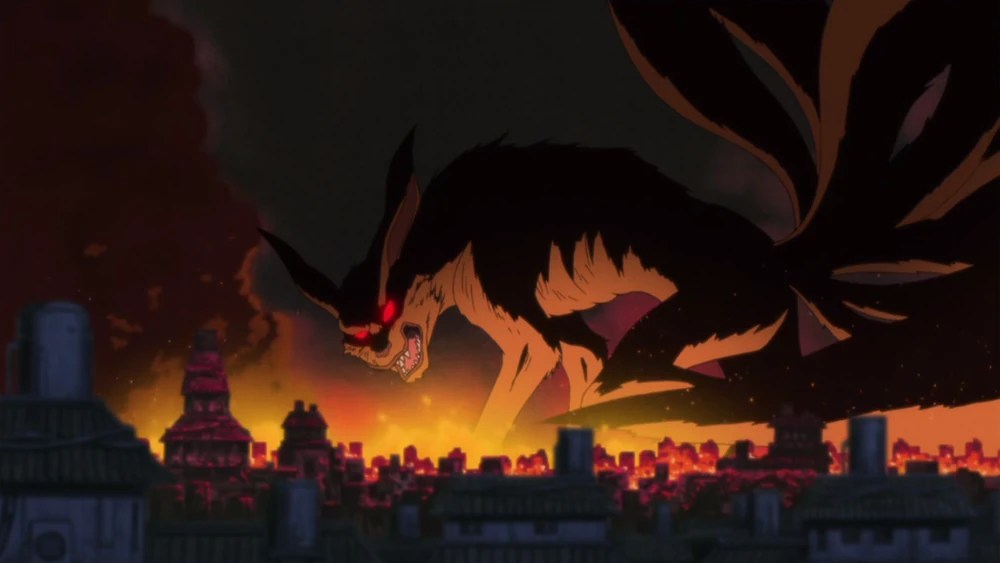
With nine tails of his own, the tailed beast Kurama differs from the more traditional Kitsune in that he was rather created in an attempt to divide the overwhelming power of the Ten Tails. His creator, Hagaromo Otsutsuki, the Sage of Six Paths and the Father of Shinobi, sent him to live within a temple, protecting the mountainous forest area that would eventually become a portion of the Land of Fire. But, over time, Kurama would gain a reputation as a walking natural disaster and as communities grew around him, his power and immense chakra became an object of desire, making him a target of ambitious shinobi. One such converter was Madara Uchiha, who used the ocular powers of the sharingan to enslave the demon fox, all in an attempt to defeat his rival and former friend, Hashirama Senju, the first Hokage of the Hidden Leaf Village. Following their battle and Madara’s defeat, Hashirama’s wife, Mito Uzumaki, sealed Kurama within herself to protect the village, and to prevent the power of the nine tails from being further exploited, making herself the very first Jinchuriki.
Though the act of becoming a Jinchuriki is, in theory, similar to Kitsunetsuki, there are actually crucial differences. Kurama was never willingly put into a vessel, he was sealed within Mito, Kushina and later – at least, half of himself – within Naruto upon his birth, and not once was it of his own volition. He didn’t take kindly to being sealed, or to be quite honest — imprisoned – and would grow to become quite resentful of humanity.
And, while Kurama lacked the shapeshifting ability of the mythological Kitsune, he inherited the cunning and manipulative nature of the Nogitsune. Throughout Naruto’s childhood, Kurama would oftentimes attempt to exploit his loneliness and anger, whispering temptations and seeking ways to break the seal. Though, much like the dual nature of the Kitsune, Kurama softened as an effect of Naruto’s compassion and understanding. and a relationship initially defined by fear and mistrust transformed into one of respect, loyalty and cooperation.

The tale of Kurama within the Naruto series illustrates how mythology is not only preserved but reimagined across generations, fusing ancient folklore with modern storytelling. The result is a deeply complex character that embodies the dual nature of the Kitsune – destructive and cunning like the Nogitsune, yet ultimately capable of softness and loyalty like the divine Tenko. By allowing Kurama to grow alongside Naruto, Kishimoto gave him far more depth than one might have expected of a demon fox when venturing into the Naruto series. He expanded upon the myths of Japanese folklore, reminding us that myths don’t have to be stagnant, that they can evolve with humanity, inspiring each new generation, and using them as an avenue to teach us ways in which to grapple with questions of fear, identity and transformation.
BUT, regrettably that’s all the time I have for today, but I hope I was able to give you more insight on the legendary Kitsune and the ways in which Masashi Kishimoto drew inspiration from his culture to enrich the story of Naruto!
References:
Martin, Roland. “kitsune”. Encyclopedia Britannica, 28 Mar. 2024https://www.britannica.com/topic/kitsune.Matt. “Yokai.Com.”
Kitsune | Yokai.Com, yokai.com/kitsune/?srsltid=AfmBOopYND8eq-T1E9JPPfOr0gy2IxVwh-mgsmm1peESxpDxuAjS1hYX.Matt. “Yokai.Com.”
Nogitsune | Yokai.Com, yokai.com/nogitsune/.
“Kurama.” Narutopedia, naruto.fandom.com/wiki/Kurama.
 Myths & Mischief
You must be logged in to post a comment.