
Hypothetically, what if we could create spaces for people of all abilities, using ancient principles and values?
Welcome or welcome back to the Myths & Mischiefs blog! This is Anaika, lover of all things ancient history and architectural heritage. In honour of people of all abilities and backgrounds, I’d like to propose a building plan for the future, based on the past. By embracing the timeless principles from the ancient world, we can design architectural and green spaces that are inclusive, accessible, and beautiful for people of all abilities.

Hypothetically speaking…
There are certain elements we find across regions and cultures of the ancient world that I’d like to highlight and bring into the present. These aren’t specifically recorded by a scholar but rather common threads one can notice.
These elements are:
- The idea of “universal design”, as it is called today.
- Making spaces functional and hence adaptable to changes.
- Experiencing architecture through all the senses.
- The therapeutic benefits of green spaces and nature.
[There’s so much to cover and so little space… have a look at the bibliography for more!]
Hypothetically, if I were to create a space for people of all abilities, it would be a sensory experience in a functional space that offers an aesthetically pleasing experience to the central nervous system.
What might this look like? Some columns and lots of symmetry of course. A picture is worth a thousand words, hence to save time:
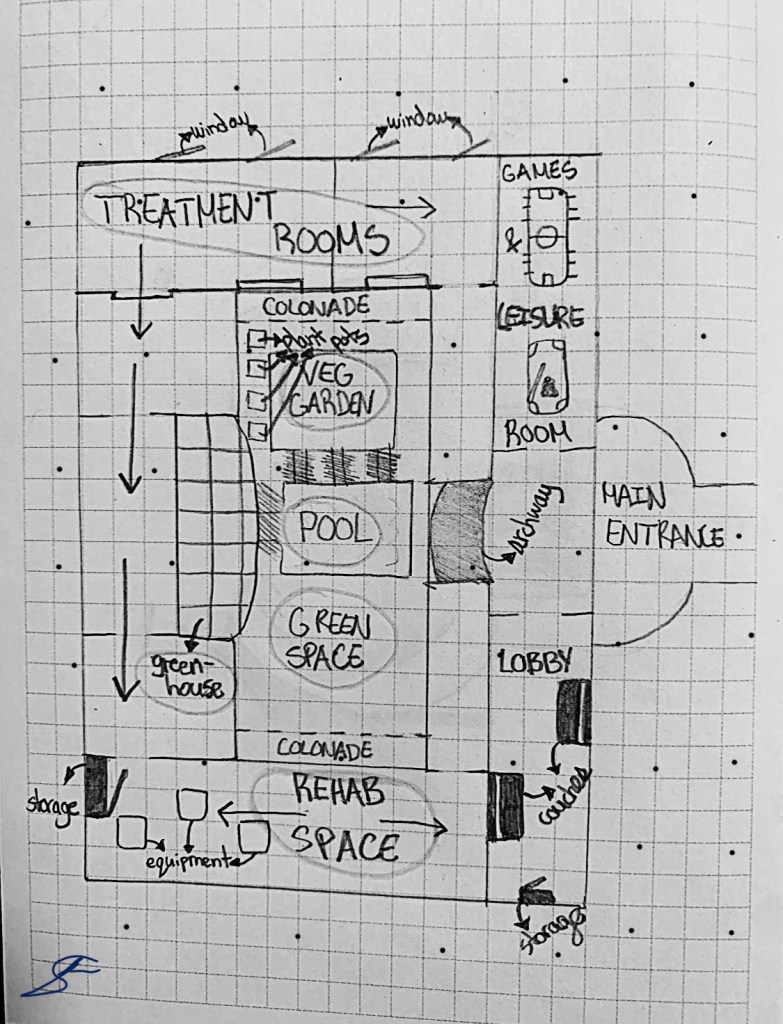
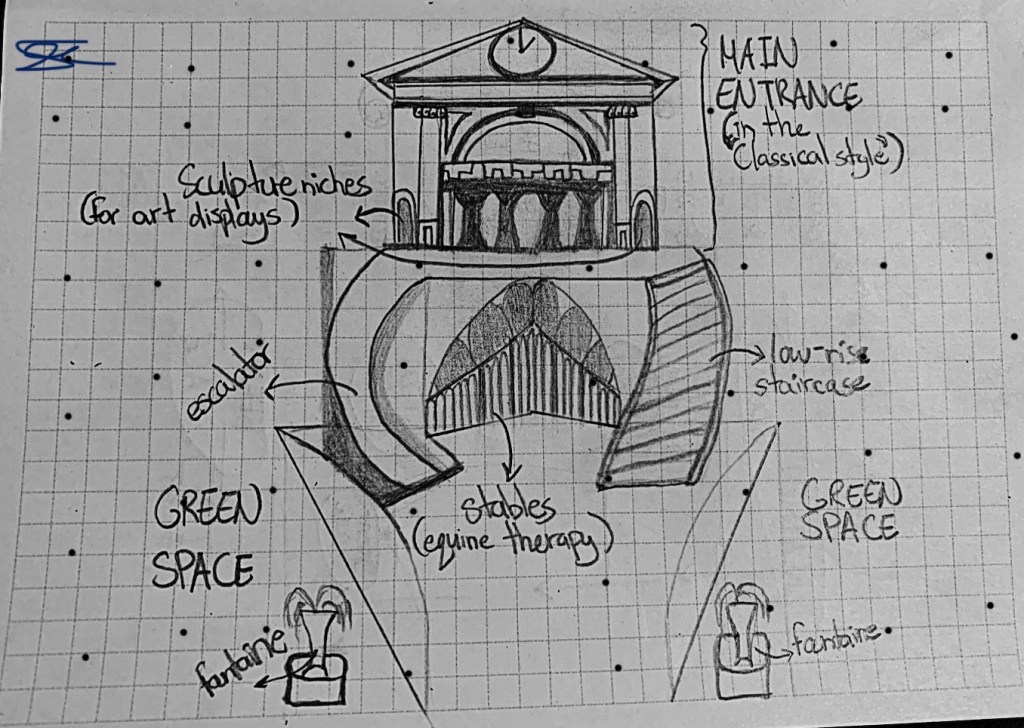
Now for some history!
Ancient theories of building and landscape architecture
Graeco-Roman
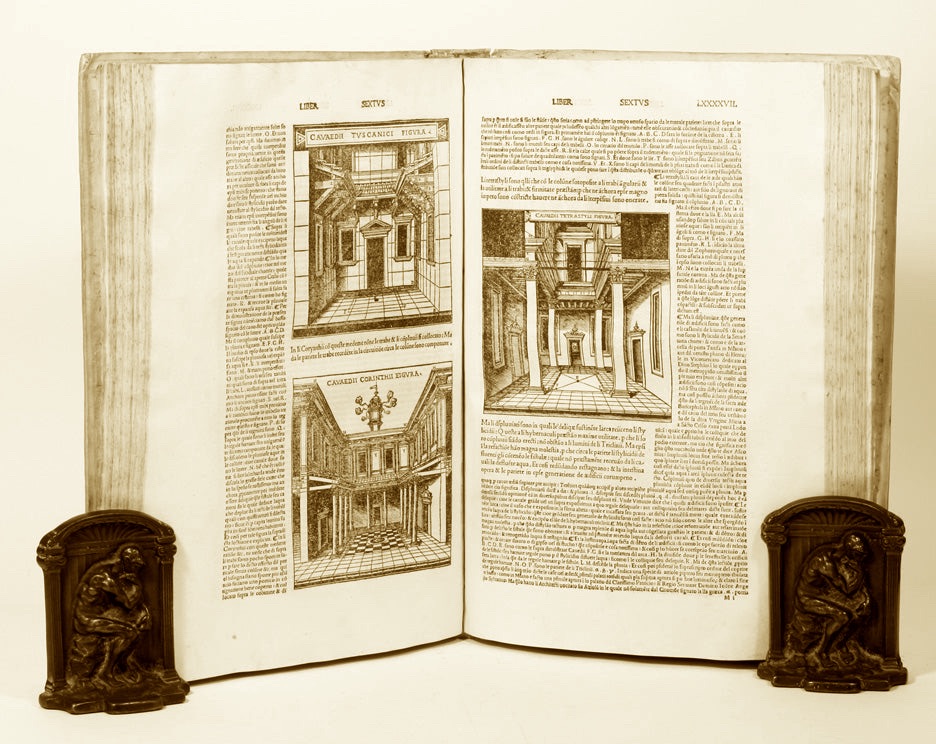
As an architectural history buff, I have to start with Vitruvius (1 century BC) from Ancient Greece. His influence spread throughout the ages and he was referenced in books from the 1st century BC through the 19th century AD. (…giving Plato and Socrates a run for their coins!) Vitruvius advocated for the design of buildings that are functional, beautiful, and durable for all people regardless of age or ability.
[History buffs: look up Book 1, Chapter 1 of his work “De Architectura”!]
He outlined the following in his major work, “De Architectura” (20-30 BC):
- “The architect must be prepared to consider the needs of all people, regardless of age or ability.” (Book 1, Chapter 2)
- “The architect should consider the needs of the people who will use the building and design it to be accessible and usable by all, regardless of age or ability.” (Book 5, Chapter 10)
[Translated, see bibliography for more.]
However, disabilities were often viewed as strange or worse (possession and curses). People were judged and ostracized by the standards of ancient societies. Thousands of years ago people were also not as ‘comfortable’ as we are now, without our advanced modern technologies and constant medical advancements.
What I’d like to highlight is the underlying spirit of physical functionality and aesthetic harmony in history. This could be revived for modern building and space designs. As Vitruvius says the building has to be functional, which today would mean being accessible to bodies of all abilities. Many ancient societies across the world also believed that symmetry and geometric patterns were not only divine but harmonious in a pleasing way to the mind and soul. From this I’ve pieced together a hypothetical space that could fulfill the needs of the mind, body and soul.
Additional ideas and virtues that Ancient Graeco-Romans held, which are relevant here, are TEMENOS and XENIA. In honour of Pride Disability Month, the spaces I imagine would of course be inclusive and welcoming to all people no matter what.
Temenos was a term used to refer to a sacred (spiritual) or liminal (in-between) zone that was accessible and inclusive. Translated from the Greek “τεμενος” it meant “a sacred precinct” or “a consecrated area.” Set apart from the everyday world it was meant to connect people to something greater than themselves, or achieve a deeper understanding of their place in the world. It could be used for anything from natural safe havens (mountains and forests) or sacred spiritual places (particularly for indigenous communities) to therapeutic spaces… which I shall return to in a bit.
Xenia (“ξενία”) was a virtue to which people aspired. It was hospitality, generosity and reciprocity… yet again only to a certain extent because there were some people by societal standards whom you “shouldn’t” accept into your home. Nevertheless, this virtue had a vital role in community building and welcoming of all people. Xenia was even incorporated into architecture, which I’ll also touch upon later.
Both Temenos and Xenia helped to foster a sense of belonging and shared humanity; in my opinion this is inclusivity at its best.
Ancient Persia
But wait, the ancient world evidently wasn’t limited to the Graeco-Romans! In Ancient Persia, the poet and philosopher Rumi (b.1207-1273 CE) wrote about a blind man who was said to have a deep understanding of spiritual truths. His so-called disability was rather a gift! This holistic and positive view of people is incorporated into their traditional healing practices.
The term MEHR (“مهر”) in Ancient Persian which, similar to Xenia, is the principle benevolence, kindness, and generosity. Another relevant custom is TAAROF (“تعارف”), which involves offering bread and salt to guest. These two cultural values involved levelling the playing field for any meeting between strangers and developed mutual respect.
These values were particularly important when welcoming those who needed medical help. There were fascinating places called “maristan” (“بيمارستان”) in Ancient Persia, which were “houses for the sick” (stemming from the literal translation of “bimaristan”). These spaces were fascinating because of the level of care that was provided. Also, because care extended to not only to people with physical disabilities, but also chronic conditions and mental conditions. Support workers used advanced treatments for the time and focused on compassion, active rehabilitation, and spiritual support.
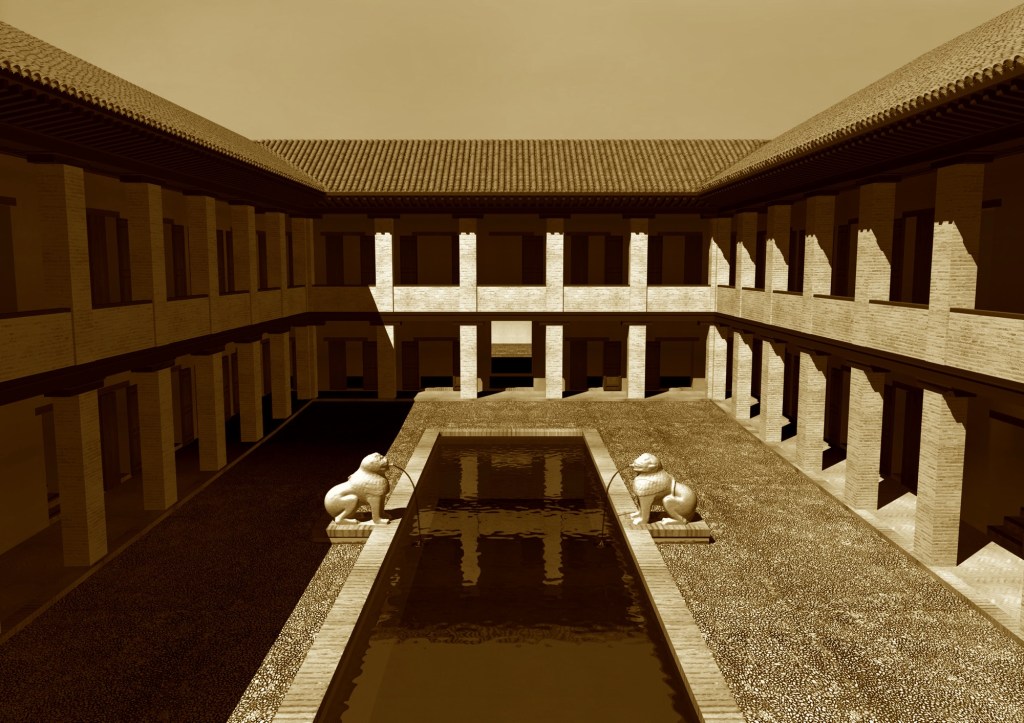
the reign of Muhammad V of the Nasrid dynasty.
The Maristan of Fez in Morocco (images not found), for instance, provided care for people with paralysis, blindness, and epilepsy, among other things…. quite avant-garde for the time! Physical and occupational therapy was used to help patients regain mobility and independence. Paralysis was simply a hurdle to overcome, hence patience was given strengthening exercises. Patients with mental conditions were assigned garden work for mental stimulation and community support.
In conclusion…
In the 1980s, we made strides with the concept of “universal design” and our hospitals worldwide continue to advance in terms of technology. But there is so much more we could do with architectural and garden design to not only improve care but also foster community support… particularly for those who currently feel excluded. To achieve this, perhaps we should be looking back, to build the future.
Thank you for reading!
If you liked this post, subscribe to never miss an adventure into history and mythology!
Bibliography
Summary and images from “De Architectura” (On Architecture)
https://penelope.uchicago.edu/Thayer/E/Roman/Texts/Vitruvius/home.html
Importance of symmetry and geometry in ancient thought and architecture https://www.re-thinkingthefuture.com/articles/symmetry/
On Xenia and the Ancient Greek Society https://www.britannica.com/topic/xenia-sociology
History and etymology of the Maristan https://psychiatryonline.org/doi/10.1176/appi.ajp.2015.15010051#:~:text=The%20word%20%E2%80%9Cmaristan%E2%80%9D%20is%20a,dynasty%20in%20the%2012th%20century.
About the Maristan in Granada (virtual reconstruction pictured in article)
https://www.archnet.org/sites/5015https://www.ejournalofpublicaffairs.org/wp-content/uploads/2018/11/40-92-2-PB.pdf
[Page in Spanish] https://www.academiacolecciones.com/arquitectura/inventario.php?id=AA-417_i05https://www.ejournalofpublicaffairs.org/wp-content/uploads/2018/11/40-92-2-PB.pdf
Sidi Frej Maristan (Fez, Morocco)
https://explore.museumwnf.org/itineraries/c-ma/i-60/si-63/m-1242/lan-en
Ancient Persian cultural values https://www.getty.edu/art/exhibitions/persia/explore.html
https://www.bbc.com/travel/article/20161104-the-persian-art-of-etiquette
Concept of TAAROF (Politeness and mutual respect) https://culturalatlas.sbs.com.au/iranian-culture/iranian-culture-etiquette#:~:text=Nina%20Evason%2C%202016-,’Taarof’%20(Politeness%20and%20Mutual%20Respect),each%20person%20adheres%20to%20taarof.
Water was very important to both Persian and Chinese cultures. Read about Feng Shui, for instance, for more!
 Myths & Mischief
You must be logged in to post a comment.