
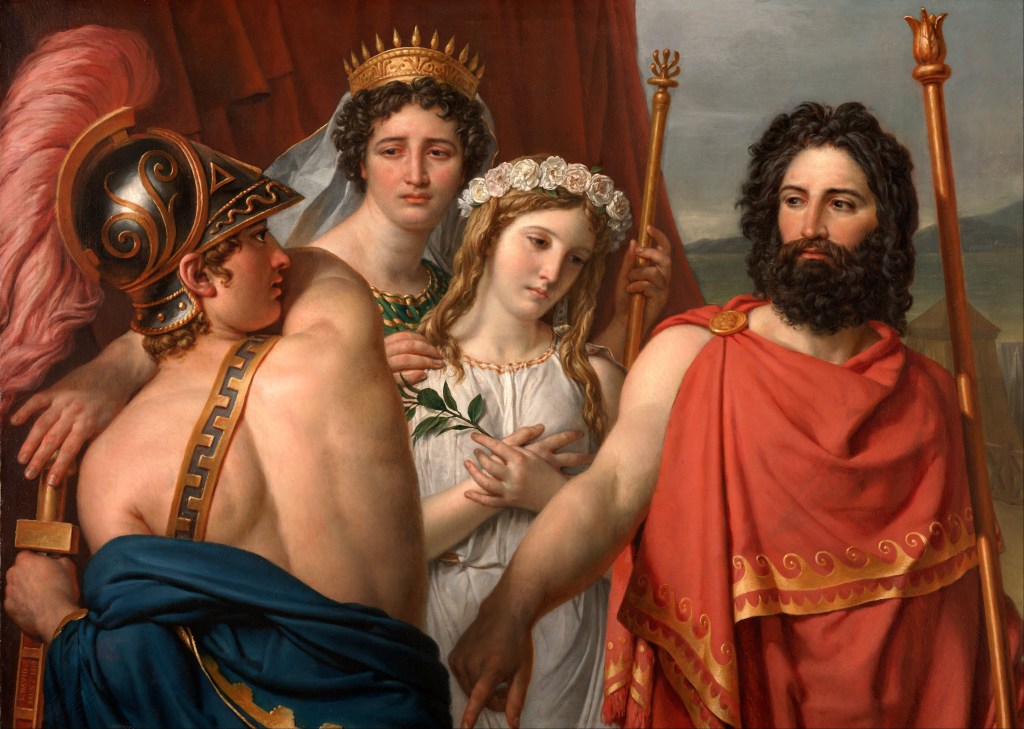
Welcome back to Myths & Mischief! This is your Lovable Lord of Lore, and today’s mischievous myth is about the poor choices of the Greek’s king of kings, Agamemnon.
According to Legend, Agamemnon was the king of Mycenae, and the most powerful king of his time. He had married a woman from a family that was in an ongoing conflict with his own family. This was the beginning of several mistakes that would prove to be fatal.
In order to gain more powerful, and to write his name in the annals of time by achieving the impossible, he set out to sack Troy for the first time in history.
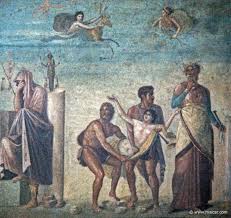
Agamemnon recruited other kings and armies to join his quest including the legendary Achilles. In order to ensure favorable wind for his journey, Agamemnon sacrificed his daughter, Iphigenia. This was unusual because human sacrifice was seen as a way to anger the gods. The gods were not the only ones that were upset. Agamemnon’s wife, Clytemnestra, tried to prevent the sacrifice, but was ushered away.
Agamemnon traveled safely to Troy and began his assault. During the war, the attacking Greeks took a war prize, Chryseis, who was the daughter of Chryses. Chryses was a priest that worshiped Apollo, and demanded her return. When his demand was refused, Apollo unleashed a plague on the attacking army’s camp. Distraught over having to return his prize, Agamemnon then stole Achilles’ prize, Briseis, as compensation. This caused a dispute between the two and Achilles refused to fight in the remainder of the war. Achilles had inspired the attacking army as well as devastating those that opposed him. The army was disheartened, and their productivity suffered. Many more Greek soldiers died.

After 10 years of war and a Trojan Horse later, the Greeks were successful at sacking Troy. As depicted by the Lord of the Rings, fires were lit on mountain tops from Troy to Mycenae as a way for Agamemnon to send word home about their victory and their return home. Of course Odysseus took a long time to return home, but Agamemnon made a more direct path.

During Agamemnon’s absence in Mycenae, his wife mourned the death of their daughter and eventually she had an affair with the captain of the guard, and a family member named Aegisthus, unbeknownst to Agamemnon. When she heard of his triumphant return, she organized a grand victory parade from the ship to their home.
Traveling with Agamemnon was his concubine, Cassandra. The reason for what happened next is left to speculation. Was she planning revenge for her family in their feud, was it revenge for her daughter, or that he had left her in such a state for over a decade. Was it the influence of Aegisthus, or was the sight of her husband with his concubine the last straw?
Whatever the reason, Agamemnon landed on the shores of Mycenae, and reveled in the parade that drew him closer to home. When he arrived home, his wife welcomed him with open arms and made a big scene of it. Once he stepped through the doorway, entering their dwelling, she entered behind him, produced a blade, and slit his throat. She then took the hand of Aegisthus and they left the house to denounce the king and announce his demise at their hands.

So many of Agamemnon’s decisions led to death. His daughter, many in his army, and eventually his own. The Greeks were taught the exploits of the Iliad and the Odyssey for centuries to instill the values of honor, courage and loyalty, but it was more Clytemnestra than Agamemnon that represented these values.
If you liked this tale, make sure to subscribe for more so you don’t miss the next installment of mischievous myths!
 Myths & Mischief
You must be logged in to post a comment.