
Welcome back to Myths & Mischief! This is your Lovable Lord of Lore, today’s mischievous myth is about the impact of one of America’s favorite foods, bacon, and its devastating effects.
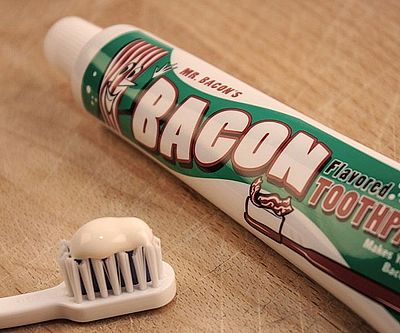
Everyone loves bacon. This infatuation with bacon comes in many forms. If you are a bacon enthusiast, there are multiple bacon flavored and scented products that you may have tried, such as fragrances, soda, jellybeans, toothpaste, lollipops, lube, sun screen, or envelopes. You can even sleep on a bacon scented pillow.
Just how deep does this obsession go? Could it start a war? Could it end one?
The answer to both questions is yes.
The backdrop of the following relates to the division of the United States between the North and the South, as the South was threatening to secede from the Union. A distraction was needed in the hopes that the north would be distracted over the conflict with England and less focused on domestic matters as the South sought to separate.

On the ides of June, 1859, Lyman Cutlar, a Kentucky native and an American, was out working on his farm. He noticed that his neighbor’s pig was eating his potato plants. This had happened numerous times before and Lyman solved his problem by shooting the pig. He and his family chopped it up and ate it. Bacon is good.
The owner of the pig, Charles Griffen, was an Irishman working for the Hudson Bay Company to run their sheep ranch on the island. He also owned several pigs which he allowed to roam freely.
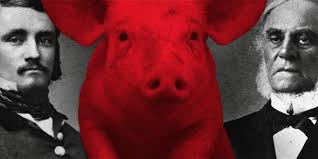
Trying to make amends, Lyman offered Charles $10, but Charles wanted 10 times that much. Lyman responded that he shouldn’t have to pay because “It was eating my potatoes.” Charles told him “It is up to you to keep your potatoes out of my pig.” Threats and excuses aside, this became an issue for the courts. The British authorities wanted to arrest Lyman. The other local American settlers rallied to his aid and requested protection from the United States Army.
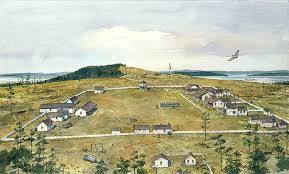
The army set up a camp and a base on the island, daring the British to fight for it. The British Military had its own issues and conceded the islands without a fight. The war ended with only one casualty, the pig.
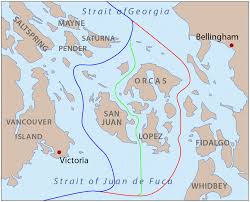
Wars started by a pig, check.
Surely a war couldn’t be ended by a pig…
It just so happens that one did.

When fighting his way to establishing the second largest empire of all time (The Mongols occupied more land), and taking over the “known world,” Alexander the Great marched into India where he had to face an army of war elephants. Alexander studied science, math, politics and war tactics under his tutor, Aristotle. Aristotle was the last person on the planet to be the authority in every field of academia. As a Macedonian, he was recalled from Athens under King Philip to teach his son before leaving on his campaign to expand their realm. Part of Alexander’s success was because he would use the resources at hand to counter methods used by resisting armies. King Porus in India gave him some advice that he put to use during his conflicts with elephants.
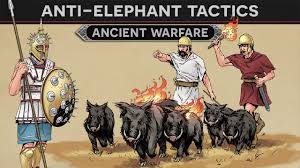
To challenge the war elephants Alexander used rams and pigs. The rams were used to charge the infantry. Just like Wilbur from Charlette’s Web, these pigs were radiant. The pigs were covered with combustible pitch, crude oil or resin, and set on fire. The flaming pigs charged the elephants while screaming and sizzling. The elephants attempted to flee in horror, as they trampled their accompanying troops, losing the battle. Alexander stopped his campaign shorty afterwards, got sick or was poisoned, and died.
Wars finished by pigs, check.
So in a world where bacon is king, where will it’s scent permeate next?
If you liked this tale, make sure to subscribe for more so you don’t miss the next installment of mischievous myths!
 Myths & Mischief
You must be logged in to post a comment.