
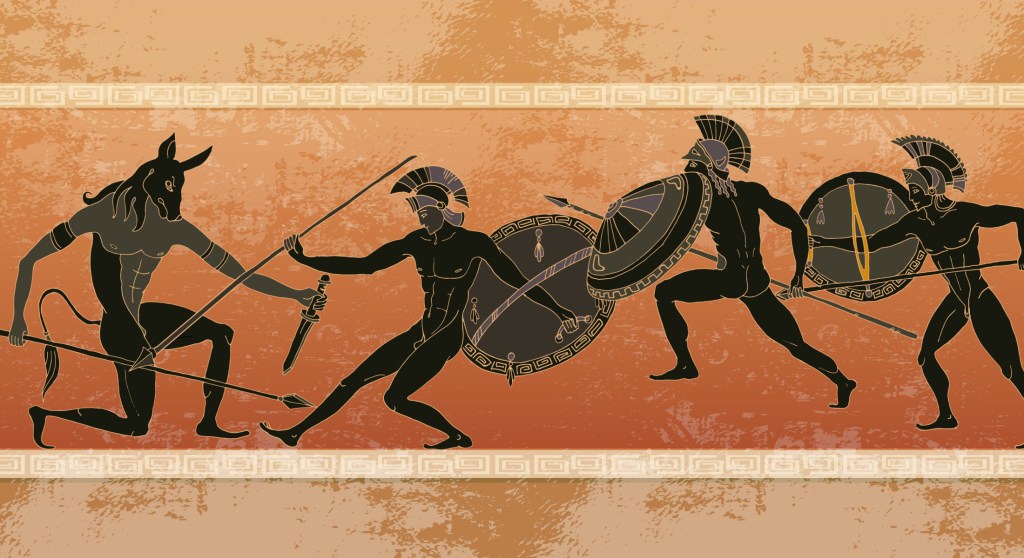
Hello there! This is S. T. Henline! Have you ever wondered how much tragedy truly exists within Mythology and Folklore?
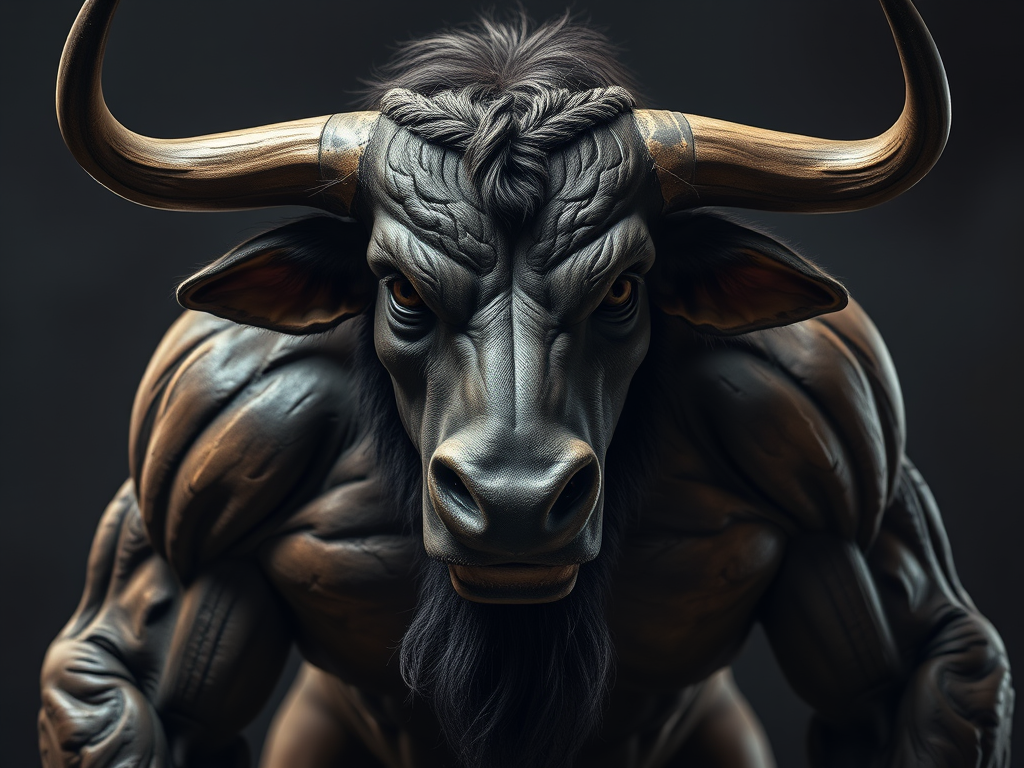
Upon delving into Greco-Roman mythology, many monsters appear at the forefront of the ‘hero’s’ journey. This is an understandable approach to storytelling because it is easier to cause fear or dislike for a person, creature, or object that appears monstrous or nefarious to the hero or heroine. Yet, it cannot go unnoticed that some of these ‘monsters’ are victims of unfortunate circumstances or criminal acts.
Myth of Minotaur’s Birth
While sources vary depending on the region, it is in common agreement that the Minotaur came about due to King Minos’ hubris and Poseidon’s anger. Through his rage, Poseidon enchanted Minos’ wife, Pasiphae. Overcome with lust, Pasiphae became entangled with the Cretan bull, resulting in the Minotaur’s birth.
Circumstances of the Minotaur’s life
Cast away by Minos into Daedalus’ labyrinth, the Minotaur was forced to live a life hidden from the world because of Minos’ shame and disgrace.
This is a common theme amongst monstrous creatures born to otherwise ‘normal’ parents. They are either cast away and left to the elements or hidden from sight to secure their parents’ honor and dignity. It speaks a lot about the world at the time, but also the world now. Individuals who look or act differently from societal norms are cast aside, forgotten, or abused.
Asset or Monster?
Even as the sources vary (regularity varies between every year or every nine years), the purpose of the Minotaur was to dispatch tributes from Athens. This was the creature’s source of sustenance, raw meat, and a measure of contention for the rest of Ancient Greece.
Speculation would suggest that Minos saw the Minotaur as a grotesque asset rather than a true asset to the kingdom of Crete. If he had been seen as such, he would have been afforded far better treatment from the king. Instead, he was left within the confines of the labyrinth for years without proper food or care.
The Filth that is Theseus
In the intervening years of Athenian tributes to Crete, Theseus (the Founder of Athens) took it upon himself to disrupt the ‘gifts’ given to Crete. But, despite how Theseus appears to be the great and noble hero of the tale, he is far from the noble man the myth might depict him as.
From just the myth of the Minotaur, he takes advantage of Ariadne, promising marriage for her assistance with the labyrinth, only to abandon her days after their wedding. That does not include him kidnapping an Amazonian queen afterwards.
So, believing Theseus was more deserving of life than the unfortunate Minotaur would be a serious question of morality. Theseus made conscious choices throughout his ‘hero’s’ journey in Ancient Greece, whereas the Minotaur was subjugated to a dismal life within a dank home.
Death of the Minotaur
With an understanding of the type of ‘hero’ Theseus was, we can now look at the death of the Minotaur at Theseus’ hand (or club, depending on sources). The battle was long and hard, but Theseus eventually rose victorious. With the help of Ariadne (due to Theseus’ promise of marriage) and from Daedalus’ instruction, Theseus was able to escape the labyrinth.
Now again, it begs to reason if the Minotaur deserved death. It was not its fault for feasting on the flesh of Athenian tributes. It was not its fault that it was born of such grotesque circumstances and bearing an ‘abhorrent’ appearance. The actions of those around the Minotaur are more to blame than the creature itself.
If Minos had only kept his promise to Poseidon to sacrifice the Cretan Bull, the Minotaur would not exist. Nor would it exist if Poseidon were not easily angered. But the greatest travesty of the Minotaur’s existence is its treatment by Minos and the people of Crete.
Was the Minotaur really a Monster?
We as humans have created thousands of monsters that go bump in the night for millennia. The reasons behind each monster vary from cautionary tales to keep children obedient or to explain the disappearances of ordinary people. ‘Monsters’ have been used to describe natural disasters and things that go ‘bump’ in the night.
The Minotaur isn’t any different. It serves as a cautionary tale, an explanation for the disappearance of Athenians, and a descriptor for things that go ‘bump’ in the night. It was a creature brought about by greed, anger, and lust. It was a monster forced to live in a dark, lonely place, fed raw meat from tributes, and murdered by a man who was not a hero but a blight on humanity.
So, the question stands: Who is the real monster in the myth of the Minotaur?
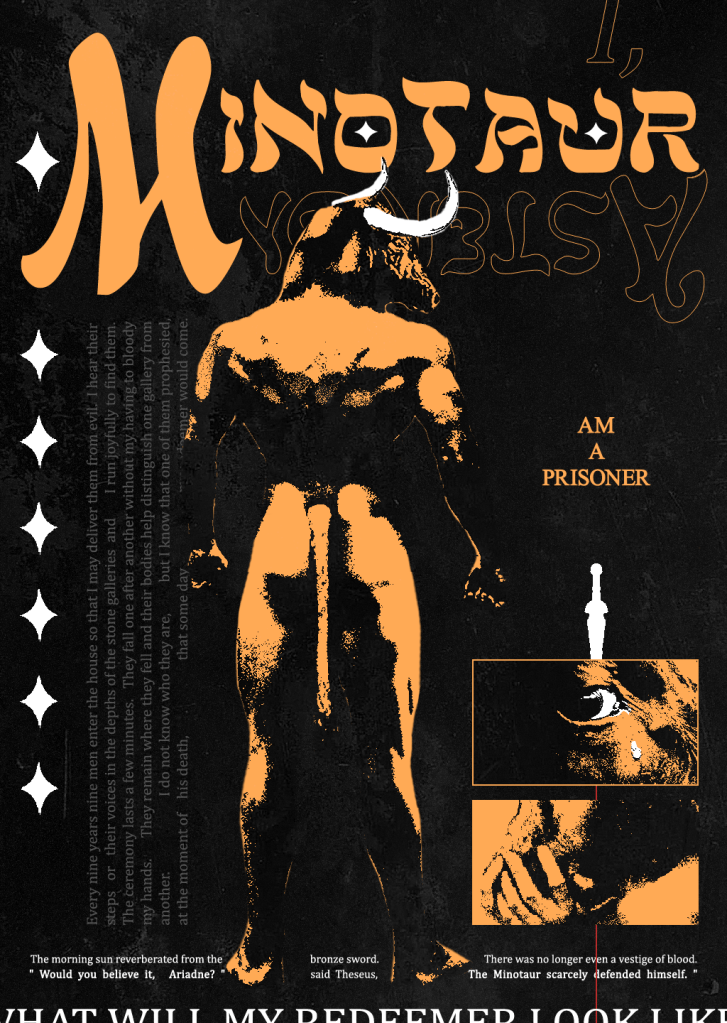
Sources
GreekMythology.com, The Editors of Website. “Minotaur”. GreekMythology.com Website, 08 Apr. 2021, https://www.greekmythology.com/Myths/Monsters/Minotaur/minotaur.html. Accessed 07 May 2025.
“Minotaur.” Encyclopædia Britannica, Encyclopædia Britannica, Inc., 19 Mar. 2025, http://www.britannica.com/topic/Minotaur. Accessed 09 May 2025.
Giesecke, Annette. Classical Mythology A to Z. Black Dog & Leventhal Publishers, 2020.
 Myths & Mischief
You must be logged in to post a comment.