

My Friends, Do I Have A Mystery for You!
The High Priestess, the Path Ahead, the Atlantean super witch: Jennifer Kale. In Agatha All Along, we haven’t gotten as much of Jen’s background as we have for Alice and Lilia. But I think the showrunners gave us some clues in her costuming choices.
Let’s dive in!
All of the other characters’ costumes follow the pattern of matching their “element” as defined by the Road. Agatha wears purple, in some way, at all times because she is the Spirit witch. Alice’s clothing always has some red accent to it, representing her role as the Fire witch. Billy’s clothing fluctuates between a dusky green and darker tones, but he was confirmed to be the Earth witch. Finally, we have Lilia, who’s always wearing a shade of yellow or gold, she is the Air witch. Now, following this pattern, Jen should be wearing blue, right. She’s the Water witch, the potions master. But she wears a mixture of primarily pink with some white tones. Even when she’s the Evil Queen from Snow White.
Don’t worry,we’ll get there.
The Meeting
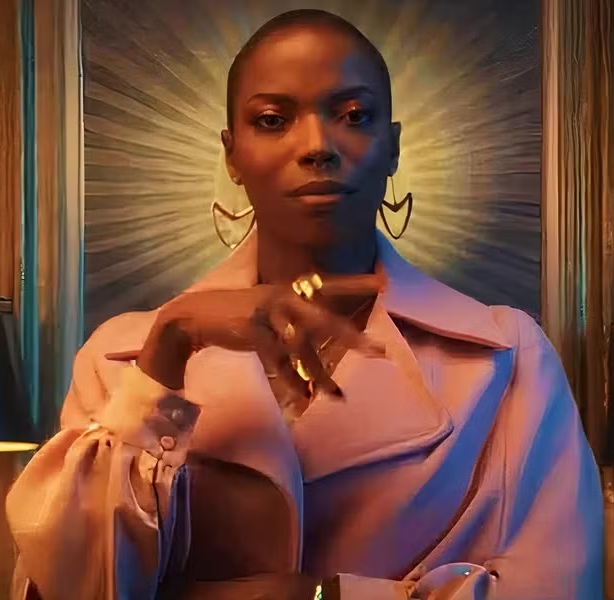
When we first met Jen, she was rude, cold, and detached. Her remark about whether Billy was “another child sacrifice” was an obvious ploy to get to Agatha. This is her defensive mechanism, a protective shell forged from her traumas that keeps others at bay. At Agatha’s house later, she’s wearing her look for the show. This is the moment Lilia recognizes her as the High Priestess, a direct nod to her depiction in the Marvel tarot card.
But why is her appearance relevant? What’s the significance of her attire, and how does it serve her character arc?
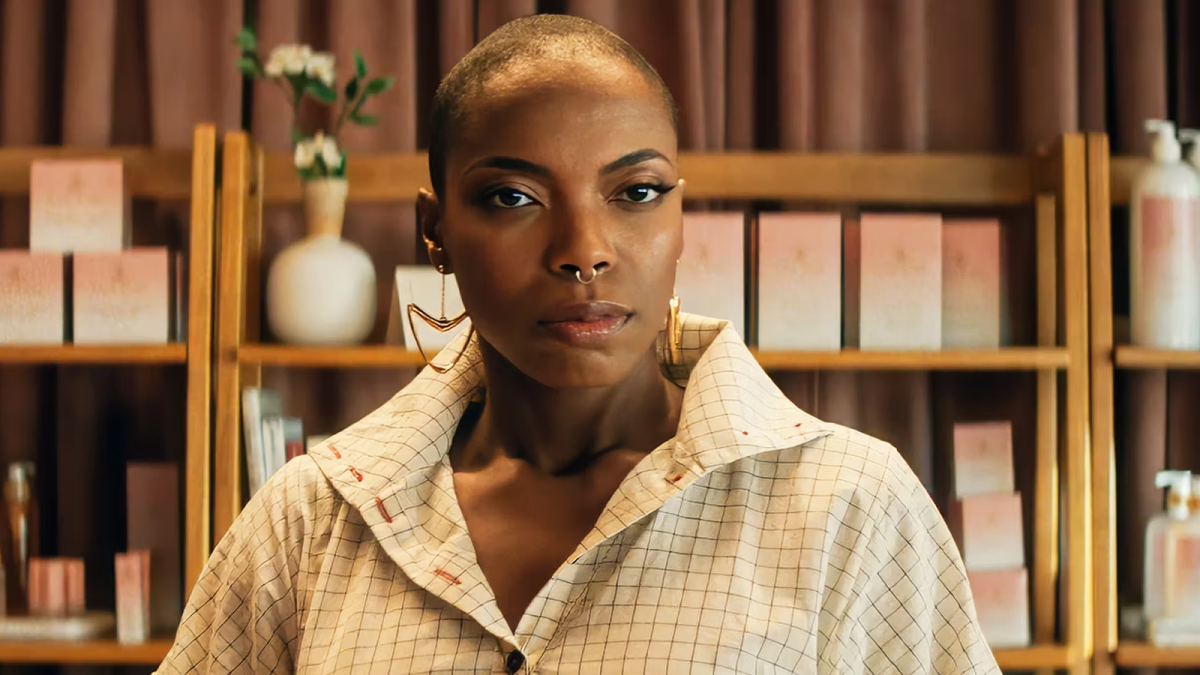
We know that Jen is deeply vain and hyper-focused on beauty, shown by her owning a product line of beauty treatments. But here’s the real question: How does an 11th-generation root worker and ancient witch willingly use chemicals in her products? A woman who once embraced the earth’s natural remedies is now ensnared in the superficiality of modern beauty standards. It feels like an intentional choice by the showrunners to highlight how far Jen has fallen since her “binding” and the loss of her magic. This woman once brought life into the world, and now she’s in the business of burning flesh off people. Oh, how the great have fallen.

It doesn’t stop there. Here’s something interesting: In some hospitals, pediatric nurses wear pink uniforms, and pink gowns are given to women in labor. Could Jen’s choice to wear pink be her clinging to trauma, a refusal to let go of her old role as a midwife and healer? Her choice of color scheme is a desperate attempt to hold onto an identity that has since become fragmented. It’s as if her costume reflects a shadow of the past. She’s still wrapped in the uniform of a life that no longer fits.
Water Trial

The first trial was Jen’s, and we learned far more about her than we initially realized. At the beginning of the Water trial, Jen looked in the mirror and said, “I look like one of my customers,” which I doubt was a coincidence. This moment felt like Jen was seeing herself as a watered-down version of her real power. It echoed Agatha’s parting words at the shop: “Have fun healing the healthy.” Just another jab at how far Jen had fallen from the height of her power. She’s living in the shell of what she once was, and that reality is starting to affect her.
Once they discovered the wine had been poisoned, Jen instinctively reverted to her potions-witch persona. She bombarded Sharon with questions to identify the poison, her intuition kicking in to reveal the answer. In that trial, it became painfully clear that she had neglected her true teachings for centuries, but watching her reconnect with them so quickly was powerful. Later, Agatha told her she supported the “real work” Jen once did; bringing life into the world and fighting disease. This callback to her past as a root worker really underscores the tragedy of her binding, which forced her to trade authentic healing for survival.
Then there’s the use of Kale Kare products as potion ingredients. To me, this suggested that her products did have potential, just not in the commercialized, skin-deep way she intended. With genuinely healing ingredients, she could have continued her life’s work, but the binding drained her power, cutting off any true magic.
Fire Trial
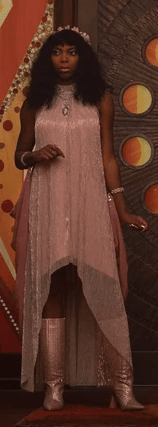
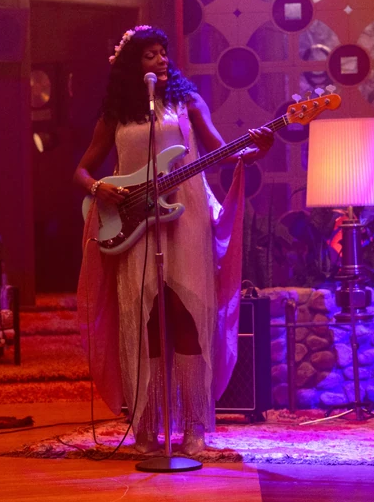
During Alice’s trial, Jen wasn’t exactly a prominent player in the episode. Aside from getting hit by the curse and throwing in a few quips, she didn’t get much screen time. But they dressed her in go-go boots and a flapper dress, two styles that shouldn’t work together, yet somehow they made it fit.
This outfit was definitely more than just a quirky fashion choice, though. They also put a rose circlet on her head, which seemed like a nod to her heritage. The rose circlet could also symbolize a longing for the power and grace she has lost. The rose circlet felt symbolic, possibly a subtle reference to her roots as an Atlantean witch or a charm meant to offer her some protection, which fit perfectly with the episode’s theme.
Jen’s outfit tells us a lot about how she’s been changed by her binding, down to her core identity. Rather than wearing something powerful or grounded in her heritage, her look is drenched in excess and artificiality. This contrast reveals the tension between her vulnerable self and the superficial roles she feels forced to play. Picture her in bold colors, synthetic fabrics, exaggerated accessories; essentially, her look channels more flash than substance. This is a far cry from the natural, elemental style we’d expect from an unbound healer who draws from the earth’s essence.
Each look reinforces her binding because, like her powers, her real essence is restrained beneath layers of commercialized flair, disconnected from the ancient, natural magic she used to practice. The costumes obscure her true self rather than expressing it. Her clothes, like her spirit, are locked in a time and style that doesn’t fit her true self but instead reflects a version of her that’s had to adapt to a world that prizes appearance over depth.
Spirit Trial

For Agatha’s trial, the showrunner, Jac Schaeffer, actually asked herself, “What would the worst experience for Agatha be?” They landed on a slumber party. Amazing. During this scene, Jen wore a onesie, which was the cutest thing in the world. This whimsical choice strips away more layers of Jen’s usual intensity and her gravitas.
The Road forced Jen into an outfit that was simultaneously lighthearted and vulnerable. The onesie represents her lost maturity, reducing her to a state that feels almost like a regression. It highlighted how her magical abilities had been restrained, forcing her into a situation where she could only experience the trivial and whimsical aspects of life.
Just as the binding limited her powers, the onesie served to confine her character, making her appear less like the formidable witch she once was.
Air Trial
As we saw in Lilia’s trial, all of the witches were dressed up as characters from mainstream media. Snow White was the very first princess movie to feature an evil queen, but she is portrayed as very old. Thanks to this, we see her own fears about aging and losing her power when she tells Lilia she doesn’t want to talk about it. Aging her appearance is a fascinating visualization of Jennifer’s decayed power. Despite being a reflection of the Queen’s wrath, her costume was dingy, leaning heavily into the “ugly” aspect. This speaks volumes about how she perceives herself post-binding: diminished, flawed, and no longer a majestic force.
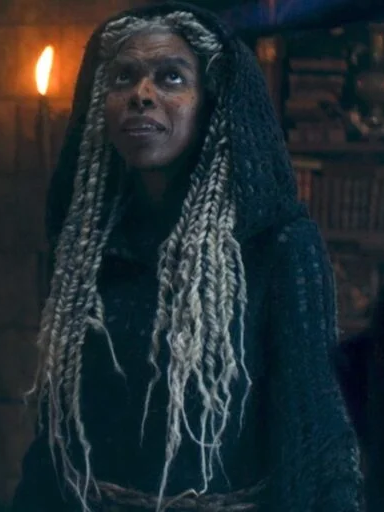
The disheveled look indicates a loss of confidence, reinforcing the idea that her binding deeply affected her self-image. Jen was meant to embody power and beauty, yet the dinginess of her costume highlights her feelings of inadequacy. Ultimately, her appearance in this trial shows the struggle of a witch wrestling with the shadows of her past.
Jen’s journey on the Road is a battle against her own psyche. As she stated, “I still don’t know how he did it. Bound me without magic.” It isn’t her loss of power she struggles with but the stranglehold of self-doubt. Each costume she was put in became an externalization of her inner turmoil. In other words, a mirror reflecting the unresolved insecurities that haunt her.
The colors chosen for her, the roles she was forced into, all reveal a woman desperate to hold onto a past that simultaneously comforts and confines her. Clinging to her midwife days, she tried to soothe herself with a fragile sense of nostalgia, yet this very comfort became its own prison. Jen is wrapped in the relics of her old life, not out of sentimentality, but out of fear of what might lie beyond it.
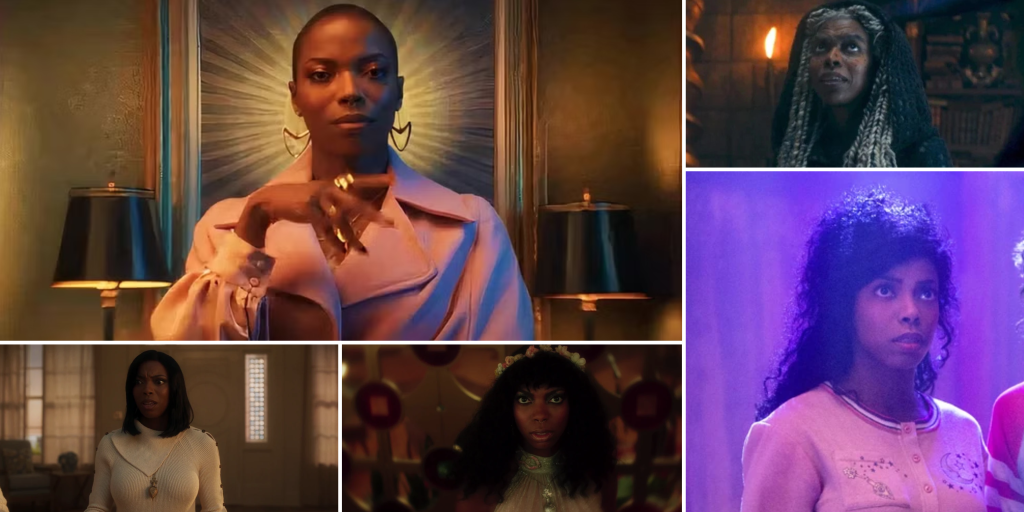
Each costume stripped away a layer of her carefully crafted facade, exposing the cracks and fractures of a self-image shaped by loss. Instead of being bound by magic, Jen is ensnared by her own perception; she’s haunted by the ghost of a once-mighty witch who can’t put the past behind her. Every trial along the Road brings up uncomfortable truths that her liberation isn’t tied to magic. She still hasn’t confronted herself, confronted her fears, and shed the superficial trappings that keep her tethered to a memory.
Ultimately, Jen’s struggle was never about reclaiming lost magic. It’s about reclaiming her own worth. It’s a fight to be whole in a world that didn’t want her to exist. Jen’s journey is not about resurrection but reinvention, a reclamation of self from the ashes of her old life.
Final episode this Wednesday! Don’t miss it. I can’t wait to see the ending of the story.
Merry Part and Merry Meet Again!
– The Researcher –
 Myths & Mischief
You must be logged in to post a comment.