

Merry Meet, Brothers and Sisters!
Agatha All Along is becoming one of my favorite shows for multiple reasons. The most important being how much research into real witchcraft versus modern day wiccan practices. I have been pleasantly surprised by the accuracy so far! This also goes for the spells and rituals Marvel has portrayed so far. Including the Ballad of the Witches’ Road that we hear consistently throughout the series.
As you know, I love to break down the lyrics to original songs created for our media to find the symbology in them. For example, we learned in Episode 4 that the words of the Ballad can be changed and used as a protection spell. If that’s the case, then the original song must be a combination of an invocation and instructions. There are a few lines within the Ballad that explain the rules of the Road and the expectations for its use as well as multiple places where it calls to specific powers. (We also made some YouTube videos about it!)
For this post, I was chatting with a Discord friend of mine with his own perspective of the Ballad! So, I will be sharing his thoughts as well in blue.
Let’s break this down.
Verse One
The very first line is the most telling. “Seekest thou the road to all that’s foul and fair” refers to the explanation that Marvel gives for the Road itself. “The Witches’ Road contains various monsters, demons, and other mystical creatures influenced by the goddess’ health.“ The Goddess they refer to is Witchcraft herself. She is accompanied by her counterpart, Chaos, “a lesser abstract being who acts a partner to the Goddess of Witchcraft by helping her magic break the physical rules of reality.” In the MCU, this could be the official source of Wanda’s chaos magic. It’s not confirmed, but it’s fun to think about!
The overall narrative is structured like a spell, rich with witchy imagery, and it also seems to loosely draw from the Fool’s Journey in Tarot. This journey can directly reference Billy’s path. The Fool represents unlimited potential, beginnings, and innocence. He embodies our initial steps in life and can also be linked to the New Moon. Billy has set out on a quest to find Tommy through the Road, aligning him with this lunar phase.
Google sent me down a Macbeth rabbit hole with the phrase “fair is foul and foul is fair.” While not an exact match, the witches in that play use this phrase as a nod to subversion of expectations—an inversion of values where good becomes evil and evil becomes good. This concept seems to be directly echoed in verse 3, line 2: “What you want in life may not be what you need.” It suggests that what seems best for you on your journey might lead to failure if you seek the wrong things or pursue them in misguided ways.
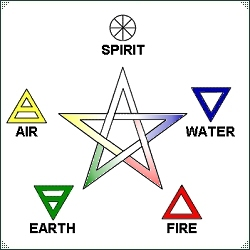
The second line literally explains the required powers needed to open the door when it says “Gather sisters fire, water, earth and air.” As we’ve seen, each trial is related to a specific element, and therefore a skill related to that element. For Jen, it was potions. For Alice, it was curses. For Agatha, it was death. For Lilia, I’m assuming it’ll be intuition. And for Billy (not Rio, I know), I have a feeling it’ll be about grounding. More on that soon!
The song encourages you to gather those close to you, stay aware of your goals, and work toward them together. For Billy’s journey, he gathers witches who have a direct connection to him, even if he doesn’t yet realize it.
The second reference is to the Magician in Tarot. He represents our conscious awareness of the situation and our actions. He reminds us that we need a clear vision of what we want to create or achieve before we can act. Just as he gathers the elements, we too should gather the tools necessary for successfully manifesting our goals and intentions.
An alternate interpretation of the riddle involves memories, fears, or trauma, with the poison causing each person to relive a traumatic event. You noted that Jen had to confront and let go of her past trauma to unbind herself, but this symbolism applies to the entire coven: each member must overcome their individual traumas to successfully walk the Road.
This is also an invocation of the elements, but backwards. The standard invocation is Air (East), Earth (North), Water (West), Fire (South). This widely established order of invocation aligns with the cycle of creation. The sun rises in the East, travels to the Northernmost point in the heavens, sets in the East, and is reborn in the South. So reversing this cycle could signify destruction, or rebirth. It could suggest a deliberate inversion of energy, possibly reflecting the disruptive nature of the Witches’ Road itself.
The next line of the Ballad is “Darkest hour, wake thy power, earthly and divine.” Darkest hour is midnight on a New Moon. There is never a scene in Westview that shows us the moon before they enter the Road, but I think this was another flaw in their little plan. They were calling it at sundown, not midnight, because the Salem Seven was after Agatha. Curiously, the door didn’t appear until the Salem Seven breached the house. I’m thinking the door wasn’t for Agatha, because it didn’t open until a real coven was inside.

I believe this is proof that Agatha never intended to walk the Road. If she had walked it before, as she claims, she would know the proper time to call it. I’m also not certain how the Salem Seven breaching the house makes a difference if the time of day is wrong. To me it seems that Billy is the factor that triggers the Road to open. Though the exact details are definitely not clear and there’s plenty of room for interpretation.
In the Fool’s Journey, invoking one card also means invoking its opposite. In this case, that would be the High Priestess. She represents our intuition, subconscious, and the key to sacred knowledge. She stands at the veil of deeper understanding, offering us hints while keeping us out until we are ready. The High Priestess embodies our unrecognized potential, which we can only find in the dark and quiet when we listen to our inner selves. She also embodies the balance between dualities (earthly and divine). Through her role as the Divine Feminine, she reminds us to feel rather than think, to collaborate rather than compete, and to create rather than destroy.
Also, the Road appears when the Salem Seven enters the house, and Billy “nopes” out of that situation.
Speaking of covens, that brings us to the next line, “Burn and brew with coven true and glory shall be thine.” I know there was a controversy in Episode 4 with Agatha and Jen, but these are the lyrics from subtitles and multiple other trusted sources. Burn and brew. Well, that’s a little telling, isn’t it? Water was the first trial, and Fire was the second. It’s pretty fun that they keep reversing the lyrics when introducing them in the show.
Walking through life with your true friends leads to happiness and is essential for achieving your goals. In the water trial, only the true coven gathers at the sink to create the antidote and complete the challenge. Here, we can also reference the Hierophant. In the story, the Fool ventures into the wider world and encounters the beliefs and traditions of witchcraft.
The Hierophant is the masculine counterpart to the High Priestess and represents spiritual wisdom. He symbolizes the importance of identifying with a group (Billy’s connection to witchcraft) and working as a team (the coven). He embodies conforming to the rules and expectations of society, even though he inherently does not conform to the norms of witchcraft. Additionally, he signifies having a belief system (as he is a Reform Jew) and the pursuit of education or seeking a mentor (as he looks to Agatha for answers).
First Chorus
The best part of the chorus is that they say this line 3 times. “Down, down, down the road. Down the witches’ road.” Anybody that is familiar with ancient witchcraft and its rules knows that speaking something multiple times can have different results based on numerology. The most common “magical” numbers used are 3 and 7. In modern magical culture, the number 3 represents multiple concepts. Mind, body, and soul. Maiden, mother, and crone. Birth, life, and death. It’s all over pagan culture.

The end of each chorus is different though, the first one says “Circle sewn with fate. Unlock thy hidden gate.” Not only does this reiterate what Teen says in the beginning about “sharing burdens and blessings alike,” it also means that this circle is officially a coven, whether they like it or not. And they are now bound to each other’s fate. Remember, this song is a spell, so they are calling these things into existence.
Beyond the witchcraft element, there are intriguing cognitive theories on why three is such a prominent number, tracing back to how our brains developed. It’s a fun, albeit likely irrelevant, rabbit hole.
As we walk the Road, we encounter other cards along the way. So far, we’ve skipped the Empress and Emperor (the father and mother), but that imagery is already well established through his parents. The Lovers also aren’t represented in this version, as far as I can tell, and we see the Chariot and Strength misplaced.
Circle imagery is abundant throughout. Additionally, there’s a wealth of iconography sewn into Billy’s outfit. Metaphorically, we can point to the circle of life and how we must deal with whatever fate throws at us, which aligns with the rest of the chorus: we walk through life managing whatever fate presents. It also evokes the Wheel of Fortune. On the Fool’s Journey, he briefly sees how everything is connected and uncovers some of the answers he’s seeking. These experiences often appear to be the work of fate. The Wheel can also indicate a critical turning point in our lives, leading us to realize our destiny.
Summing up what we’ve already discussed, facing life’s challenges with a proper support group is key to the gate that leads to a happy and fulfilling life. Justice is the next step on the Fool’s Journey. Now that he has glimpsed the truth, he must determine what it means to him personally and make important decisions about how to move forward. Justice calls you to account for your actions. Upright, it’s a sign that justice will be served (think Agatha’s story). Most relevant in the moment is that it often appears when you need to make an important choice with the potential for long-term repercussions, like deciding to confront Agatha and walk the Road. At its core, Justice is the search for truth.
Verse Two
The second verse starts out pretty obvious. “Marching ever forward ‘neath the wooded shrine” is a direct reference to the fact that the Road goes through a forest. This is a very common witch trope, and something we often use in guided meditations; walking through the woods to find meaning in our struggles. I’m most impressed by how accurate to the comics they have been so far with the Witches’ Road. “I stray not from the path, I hold death’s hand in mine” is a perfect representation of this point. In the comics, when Wanda walks the Road, she is guided by the ghostly form of none other than Agatha Harkness. Wanda also meets her mother on the Road, which we’ll discuss another time.
The metaphor here loosely continues the refrain of walking through life. Drawing on the imagery used in guided meditations, we encounter struggles along the way. The Chariot represents growing up and becoming an adult; we see the transformation of his room and his developing sense of self as he confronts Agatha with his names in Episode 2. It also embodies his determination as he sets out to walk the Road with Agatha, demonstrating his willpower as he pushes her and the others to gather and walk the Road.
In a sense, life is what you make it; your path is the one you choose to walk. When you look back, you see that you traveled a single path through life, regardless of how many forks appeared along the way. Strength would typically follow the Chariot, but we move forward again to The Hanged Man. The Fool pushes on, determined to realize his vision while encountering challenges that humble him and force him to reflect. He must release old mental models and behaviors that no longer serve him to see the world from a new perspective and embrace new opportunities. He cautions us to pause before things get out of hand.
Metaphorically, Death is a constant companion; we lose pets, friends, and loved ones, and eventually, we too will die. Death signifies endings, often following the Hanged Man’s “why,” symbolizing the search for answers. The Fool eliminates old habits and non-essentials, speaking of change, transformation, and transition. He embodies our growth as we let go of the old to welcome the new. Reversed, this can indicate that you’re undergoing a significant personal transformation.
The next line is another of the important ones, because it tells us what the Road is for. “Primal night, giveth sight, familiar by thy side” mentions three separate concepts within witchcraft. First, primal night represents the chaotic and mysterious dark from which all creation stems. In witchcraft, it’s a metaphor for the unknown, the subconscious, and shadow work; the aspects of self or the world that remain hidden in darkness, waiting to be explored. Instead of hindering visibility, primal night enhances a witch’s inner perception.
I think you’ve explored the metaphor here more thoroughly than I can. This description aligns with the general appearance of the Moon. The Moon thematically fits as well; the Road is a place and time of uncertainty and illusion, where nothing is what it seems. It opens the door for deep-seated fears and anxieties to arise, leaving the Fool lost and bewildered. It teaches us to listen to and trust our intuition, to feel rather than think, and to let go of conscious mental blocks. It emphasizes how our dreams, intuitions, and inner guidance can lead us to higher levels of understanding. We need to pay attention to the lunar cycles and attune ourselves to its divine power.
There is a tenuous connection to the Hermit here, as familiars can help guide a witch both in their magical workings and aspects of their spiritual journey, but this is definitely a stretch. I don’t have anything more substantial for the familiar reference.
The idea here is that witches must confront their pasts, trauma, or the hidden parts of their lives to gain new insight. A familiar is a spiritual or animal that guides witches in their magical work. They are there to provide protection, insight, and companionship. In some traditions, familiars serve as extensions of the witch’s own spirit, helping them navigate both the physical and spiritual realms.
The last line of Verse Two brings the rest of the elements from Verse One together the same way the pentacle does. “If onе be gone, we carry on, spirit as our guidе” suggests that when one of the coven falls to the Road, the rest of them must continue on in honor of that fallen sister. With Spirit as their guide, they are following the regenerative power of Death who guards and guides our souls to the next life. Or the afterlife, if that’s our fate. I’m sure Marvel used this line as a clever nod to Agatha as a Spirit witch, but I’ll get there.
When taken as a whole with “If one be gone,” the line suggests that the memory of our loved ones remains with us, urging us to carry on and learn from the lessons of their lives. In the version sung in the show, they use “If sun be gone,” which calls to mind the Sun Reversed.
In the Fool’s Journey, the Sun’s light shines in all the hidden places, dispelling the clouds of confusion and fear. The Fool becomes enlightened, understanding the goodness of the world and realizing his own greatness. However, we aren’t at that point in our journey yet, so we see it reversed, reflecting temporary struggles, setbacks, and obstacles that may lead to doubts and depression. Importantly, though, the Sun is never wholly negative; even in these dark times, we must carry on to allow life to improve.
“With Spirit as our guide” prompts us to examine the Star. The Star represents hope, faith, and purpose, reminding us that even though we may feel down now, the trials we have faced have led us to the core of our essence—who we are beneath all the layers. With the Star’s influence, anything is possible, and magic flows around you. As your inspiration, she can help you find or rediscover a sense of meaning, inspiration, or purpose in your life.
Second Chorus
As I said before, all of the choruses have different endings. This one has heavy symbological relevance. “Blood and tears and bone” are classic components in magic culture and represent the core elements of life. Blood amplifies the intensity of a spell, tying it directly to someone’s life force. Tears are used in banishment charms and purification rituals, or to enhance spells for emotional clarity or forgiveness. Bones build a bridge from the earthly plane and facilitate communication with our ancestors.
The invocation of “Maiden, Mother, Crone” draws from the Wiccan interpretation of the triquetra, representing the Body, Mind, and Soul. Each aspect embodies distinct phases of the Divine Feminine’s existence. The Maiden symbolizes youth, innocence, and new beginnings, often invoked in spells related to growth and love. The Mother embodies nurturing and creation, linked to spells of protection and abundance, representing life in full bloom. The Crone signifies wisdom, transformation, and death; she embodies our inner guidance, the voice that steers us, and the wise woman we will evolve into.

I found an insightful breakdown of the Mother, Maiden, and Crone in Tarot. In the context of the Fool’s Journey and the song, we can align the Fool with the Maiden, the Empress with the Mother, and the Hermit with the Crone (or the High Priestess or Death, but they’ve already appeared in our journey).
The Fool embodies the essence of the Maiden, representing youth, innocence, and new beginnings. The Empress personifies the Mother, symbolizing nurturing and creation. The Hermit teaches us to ask why and search for deeper truths; he embodies the need for introspection and understanding of oneself. He also serves as an opportunity to seek guidance and represents the journey of soul-searching and inner wisdom.
The blending of these elements serves as a reminder of the balance between the physical and spiritual realms. Much like the Witches’ Road relies on a balance between Witchcraft and Chaos.
Verse Three
At the end of the song, we go back to describing the environment of the Road itself. “The road is wild and wicked, winding through the wood.” As with before, referring to the wooded shrine, this specifically refers to the winding path that we walk as humans, facing life’s obstacles and struggles. It’s interesting to consider a possible connection to the Winding Way, another mystical source of power that embodies its own unique energy. This reference would not surprise me because they love to combine comic book concepts when creating their media.
Metaphorically, life takes us in unpredictable directions. We acknowledge that the Fool’s journey has swung wildly back and forth. As the song wraps up, everything is starting to come together. At this stage of our journey, it’s time to find balance and integrate all the aspects we’ve discovered along the way into a new self.

“Where all that’s wrong is right and all that’s bad is good” represents the concept that traditional morals blur on the Road, because witches who walk the Road face challenges that will force them to reevaluate their perceptions of good and evil. “Through many miles of tricks and trials, we’ll wander high and low” definitely sounds like they’re going to be walking a ways down this Road and facing more than they expect. The Witches’ Road is a treacherous, mystical pathway that tests a coven’s strength and resolve. Much like the lyrics suggest, walking the Road requires facing numerous obstacles over long distances, forcing the coven to either survive or give up.
The Devil comes to mind, particularly in light of the reversal in the lyrics. Within the Fool’s journey, the Devil symbolizes the knot of ignorance and hopelessness that resides within us—our negative attachments, addictions, and bad habits. It can also represent instant gratification, manifesting as thoughts that convince us we have no control over our shadow selves or the negative forces we face, making us feel trapped in their hold. Breaking free from these aspects can be extremely challenging, often requiring significant willpower, strength, and time.
Reversed, as we approach the conclusion of the song, the Road, and the Journey, we find ourselves on the verge of a breakthrough. However, we must let go of our unhealthy attachments and confront our inner fears and anxieties. This confrontation reveals our deepest, darkest places, whether we are ready to face them or not.
Freedom from our darkest aspects often involves sudden change, invoking the Tower. We’ve built a fortress around our ego, and sometimes only a monumental event can shatter those walls. The phrases “high and low” allude to the Tower, both upright and reversed, indicating that the world will throw unexpected changes our way. Yet, we must also focus on personal transformation. While change can be painful, it can lead to revelations that make those experiences worthwhile.
Finally, we have a description of the trials. “Tame your fears, a door appears, the time has come to go” tells us exactly what the witches will be facing on the Road. We’re not talking about standard daily fears, oh no. This is referring to the fears that permeate your soul and affect your daily life. Like extreme trauma, survivor’s guilt, and inaccurate stereotypes.
We finally see a call to Strength.
Judgment tells us that the Fool has completed his transformation, shedding his false self and being reborn. It urges us to rise up and embrace our new selves, to see who we truly are, and to choose which beliefs and values we should uphold and which to discard. This newfound clarity allows us to enter a new phase of our lives, making decisions about the future with a full understanding of who we are.
We re-enter the world renewed and changed. You’ve accomplished your goal and integrated what you’ve learned to form a new self that can experience the world in a fresh way.
Final Chorus
The final line of the song is the most obvious, I think. “Follow me, my friend. To glory at the end” is just saying that it requires companionship and teamwork to make it to the end. Since this is supposed to be a journey for a coven, I can definitely see why they would invoke friendship here.
Metaphorically, we should walk the Road of life with those close to us. It’s an invitation to embark on the Fool’s Journey, with the promise that the World awaits us at the end.
 Myths & Mischief
One response to “The Ballad of the Witches’ Road (Sacred Chant)”
[…] no intent of summoning the Road the night the coven gathered. Something that was brought up in our Ballad breakdown is that the conjuring of the Road should happen at midnight, likely during a new moon and requires […]
LikeLike