

Welcome back to my realm beneath the surface!
Buckle up, because we’re plunging headfirst into the aquatic enigma of Triton’s family tree!King Triton, the ocean’s magnetic patriarch, seems to effortlessly embody the fluidity of Greek sexuality, echoing the timeless mantra of “love knows no bounds.” Of course, we can’t overlook the family’s colorful history, especially when it comes to Triton’s relatives like his father, Poseidon, and…
Well, let’s just leave Zeus and his avian admirations out of this, shall we?
Well, let’s just leave Zeus and his avian admirations out of this, shall we?
We don’t discuss Zeus the goose.

If you’re thinking these underwater family dynamics sound like a soap opera with fins, you are not alone! But in the House of Adventure, even the mermaids can’t escape the currents of intrigue.
Yep, I’m diving straight into the puns, and I’m not looking back!
Now, before you adjust your seaweed scope, let’s turn our attention to our specific scandal: Ariel’s lineage.Queen Athena might hold the title of ocean matriarch, but let’s be real, her resemblance isn’t exactly splashed across all her offspring. Only one of her children even looks like her.
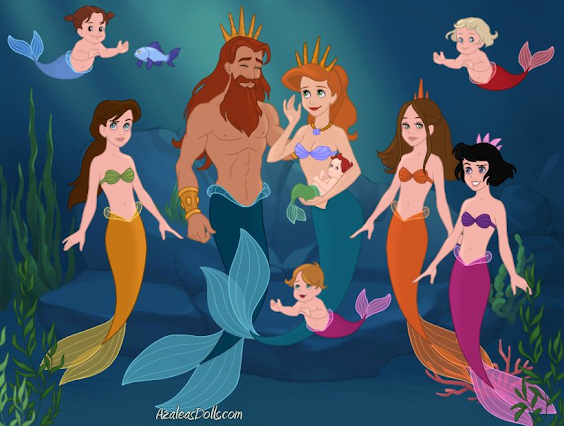
Let’s entertain the idea that maybe, just maybe, not all of Triton’s daughters swam in from the same gene pool. I mean, let’s use a bit of common sense here, shall we? I might not have a degree in marine biology, but even I can see that comparing Athena to her aquatic offspring is like trying to compare sushi to a Greek salad.
So, strap on your detective gear, because we’re diving deep into the uncharted depths of mermaid maternity.Get ready to make a splash, things are about to get fin-tastic beneath the waves!
Little Mermaid, by Hans Christian Anderson
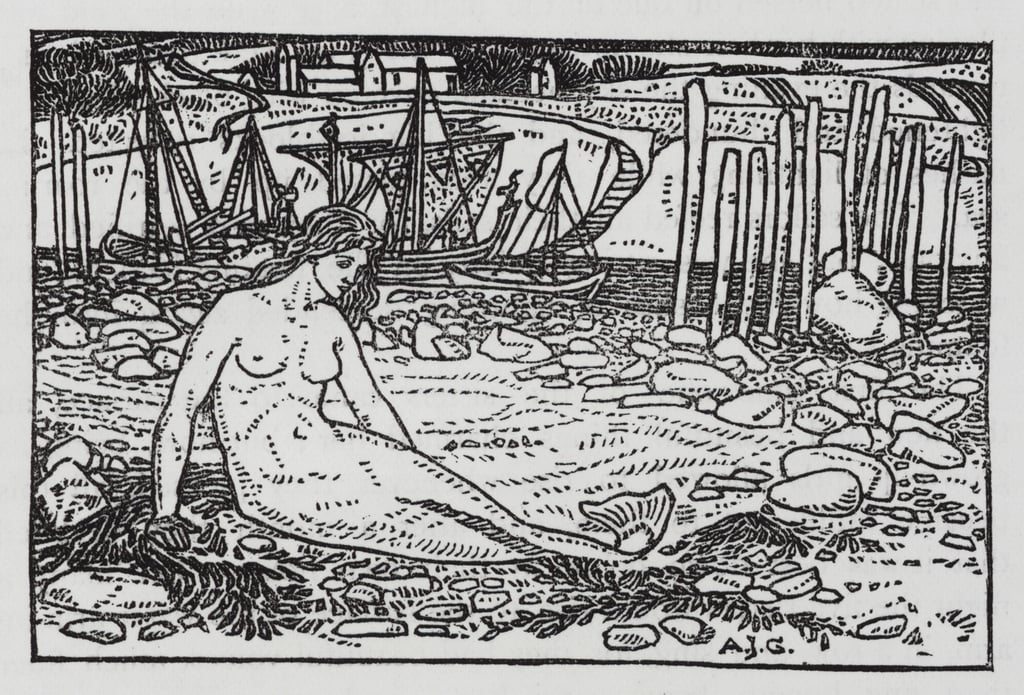
First, let’s take a plunge into the original Little Mermaid tale by Hans Christian Andersen, where Sebastian’s singing is replaced with a much darker narrative. Our protagonist, the Little Mermaid, is like the Taylor Swift of the sea: hopelessly in love with a human prince. But, of course, to be with her beloved, she has to strike a deal with the underwater underworld, courtesy of the sea witch. Now, this sea witch likes to stir up trouble with her dramatic flair for transformations. Because what’s a love story without a dash of danger and a sprinkle of dubious decisions?
|
In a moment of questionable judgment, our mermaid heroine trades her voice for a pair of human legs. Priorities. But this enchanted makeover isn’t all sunshine and seashells. Each step feels like she’s treading on shards of glass. (Something Disney conveniently forgot to mention.) And there’s a clock hanging over her head, ticking away the moments until she either wins her prince’s heart or dissolves into seafoam.Talk about a splash of maritime madness!
|
|
In a nutshell, Andersen spun a yarn where love demands a hefty price; say goodbye to your vocal cords, comfortable mobility, and, oh yeah, your very existence.Because what’s more romantic than sacrificing everything for a chance at love?
Greek Mythology Origins
|
In the mythological realm of Greek shenanigans, Triton, our merman extraordinaire, was the offspring of none other than the sea god himself, Poseidon, and the sea nymph Amphitrite.
|

Poseidon and Amphitrite
|
Poseidon
|
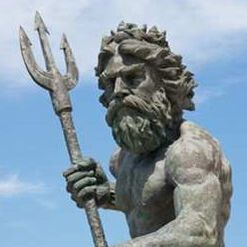
Poseidon stood as the god of the sea, brandishing his mighty trident that commanded the ebb and flow of the ocean. His influence reached far beyond the watery depths, as he also held sway over earthquakes, shaking the very foundations of the earth.Often depicted with a wild beard and a presence that demanded attention, Poseidon was a force to be reckoned with, inspiring both awe and dread among mortals.
|
|
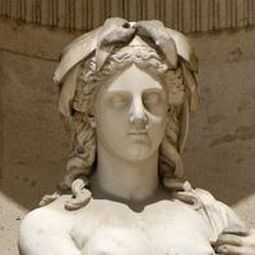
Amphitrite, Poseidon’s wife, was the epitome of grace and poise, embodying the serene yet potent essence of the ocean. It’s said he chose her specifically from among her sisters as they all performed a dance for him on the isle of Naxos.As the royal consort to Poseidon, she kept his thunderous temper in check, bringing a sense of serenity to their partnership as they ruled over the underwater kingdom. As time went on, her goddess status started to fade and now there is little to be known about her.
|
Amphitrite
|
According to the Disney tale, Triton was Poseidon’s son, with Neptune playing the role of the doting granddad, flooding him with warm and fuzzy memories. But in the stage adaptation, they threw us a curveball; Ursula, the sea witch with a flair for theatrics, turned out to be Triton’s sister. Talk about family gatherings feeling like a full-blown underwater soap opera.

So, why did Triton kick Ursula to the curb? Well, turns out she had her sights set on his trident, and we’re not talking about some casual borrowing here. She had her eye on that divine scepter of authority for herself, and Triton wasn’t about to hand it over. Cue the banishment showdown, and you’ve got a family feud fit for the gods.
And just like that, the plot of the first cartoon movie suddenly clicks into place, doesn’t it?
Water Nymphs
But hold onto your seaweed hats, because there’s more to this soggy saga!
Continuing in the wild world of Greek myths, there were also fifty sea-nymph daughters of Nereus, the sea’s resident old-timer, known as the Nereids. These divine dames lounged around with their pops in a sparkly grotto at the bottom of the Aegean Sea. They were the epitome of the ocean’s lavish abundance, serving as guardian angels for sailors and fisherfolk, always ready to lend a hand to those in distress.
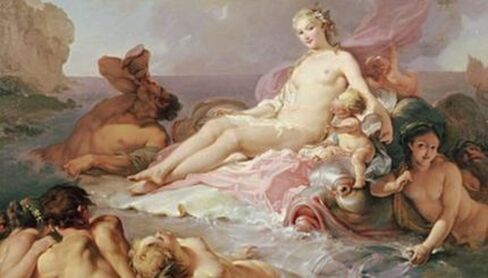
Now, why should we give a flipper about sea nymphs when it comes to Triton’s daughters? Well, remember Amphitrite?
She was one of those Nereids!
Now, isn’t that intriguing?
Each Nereid was like a little slice of the sea pie, representing everything from the salty brine to the sandy shores, just like our varied mer-sisters reigning over their own aquatic domains. Thetis and Amphitrite, being the big shots among these sea nymphs, naturally steal the spotlight. And let’s not forget how these Nereids were known to share their watery wealth with us mere mortals. Just ask Achilles!
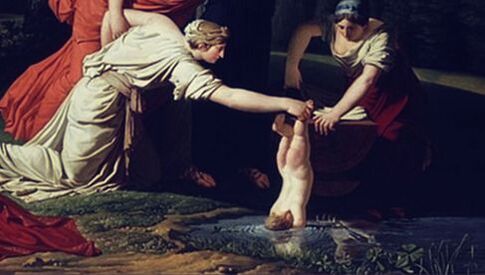
What if these Nereids, with their deep-sea connections, had a bigger role in the Seven Seas? I’m talking about a full-blown Disney-style mer-ternity test here. Could these oceanic nymphs be the real baby mamas of Triton’s daughters?!
It’s enough to make you rethink the phrase “keeping it in the family.”This sea-riously confusing
family tree might just be more convoluted than the Pixar theory.
Stay tuned, adventure enthusiasts, because I’m working to unravel some mysteries that make this family’s gatherings look like an underwater episode of Maury.
Back soon…
– The Researcher –
– The Researcher –
 Myths & Mischief