
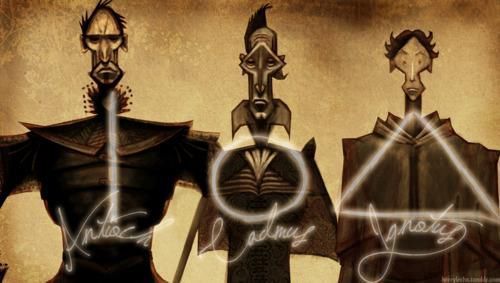
Greetings, my favorite magical mates!
Few months ago, I was chatting with a friend, Jason Bussey, in the SuperCarlinBros Discord server and he had quite an interesting theory about the Peverell brothers and the Deathly Hallows.

|
Join me in this enthralling exploration of J.K. Rowling’s cherished universe, where I hope to provide a perspective that may reshape your current perception. As we navigate through this theory, I will delve into canon sources, offering as much detail as possible to enrich your understanding.
|
So, ready your wands, don those wizarding robes, and get ready to accompany me on this captivating journey into the history of magic and intrigue. This post combines theory and extrapolation, grounded in the known canon to offer a comprehensive exploration of the subject at hand.
|
(Note: As there is very little recorded history of the Peverell family, so this post is full of heavily imagined possibilities. The references used come from numerous sources, including the HP Fandom site, the HP Lexicon site, as well as WizardingWorld.com)
Peverell Brothers & the Deathly Hallows
|
Let the adventure begin!
Backstory
(This narrative is heavily extrapolated using the above resources. Nothing is claimed as canon.)
The Peverell family is said to have begun in Medieval times, which means their family could have begun anytime from 500 CE to the early 1300s. The oldest record I could find of the name is William Peverel listed as a companion of William the Conqueror at Hastings in 1066.
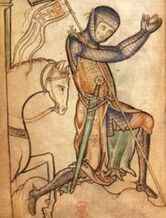
Sir William Peverel
|
Jason thinks the three brothers, Ignotus, Antioch and Cadmus, were born as triplets July 12, 1214 probably somewhere in Nottingham. (Unfortunately the only reference I found to Nottingham in HP history was that it’s where Voldemort killed a goblin family in the first Wizard War.) Without a name, we will refer to the father as Peverell Sr. Heavy suggestion says he was a thestral breeder and happily raised these mystical creatures.
Jason came up with a head-canon that when asked about them, Peverell Sr. would simply say to his sons, “someday you will understand.” |
|
On their 11th birthday, their mother, also their primary magical teacher, succumbed to dragon pox and passed. After watching her take her last breaths, the boys could suddenly see the thestrals, marking a profound turn in their magical journey. As they mourned their mother, preparations were canceled for their attendance at Hogwarts School of Witchcraft and Wizardry. Instead, their father taught them at home and Summers were devoted to raising and breeding thestrals.
|
|
On their 17th birthday, their father declared Antioch as the heir to the thestral ranch, who accepted proudly.

Elder Wand
|
Antioch, fueled by a desire to assert his seniority and secure his position as the chosen successor to his father, meticulously fashioned a new wand. He selected elder wood as its core material, defying the prevailing superstition encapsulated in the saying, “elder wand, never prosper,” and in a symbolic gesture, incorporated a strand of hair from one of his father’s thestrals into the wand’s core. This act of craftsmanship demonstrated both his mastery in magical arts and served as a tangible representation of his determination to establish himself as the primary inheritor of his father’s legacy.
|
Soon, their father fell gravely ill. As his health deteriorated, the weight of loss cast a shadow over all three brothers’ personalities. Inevitably, the day arrived when their father passed away and Cadmus dove deeper into his research on the thestrals’ connection to the veil between life and death. This marked another turning point in their lives, setting them on divergent paths.
In the aftermath of both their parents’ demise, the brothers rarely appeared in town.
The Three Brothers
Antioch Peverell
|
Antioch, discontent with his inheritance, spiraled into excessive drinking and duels. By self-propagating the rumor of his “wand’s extraordinary power”, he met his tragic end when the villagers, finding him asleep at the pub, killed him out of fear and hid his wand. Following Antioch’s demise, Ignotus feared the town’s new perception of their family and departed, taking their father’s thestral research with him. After settling in West England (Godric’s Hollow), he met a simple witch, and together they dove into his research.
|
|
During this time, he uncovered additional magical properties of thestral tail hairs and crafted a cloak that granted him true and complete invisibility. He and his also wife had a son, unnamed in history books. This son married, and their daughter, Iolanthe, continued the Peverell legacy by marrying Hardwin Potter, the eldest son of the first of the Potter line, a twelfth-century wizard named Linfred of Stinchcombe. Iolanthe promised her grandfather that she would continue the tradition of passing on the cloak to the first born child in the Peverell line.
|
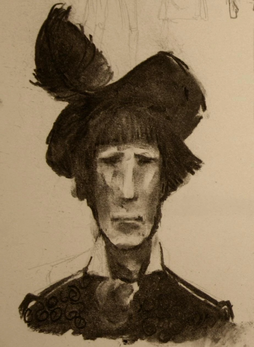
Ignotus Peverell
|
Her husband helped keep her secret so the cloak remained an heirloom in their family until it was passed down to Harry Potter in his first year at Hogwarts.
|
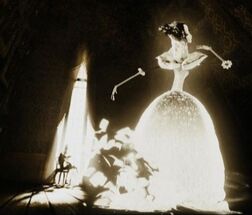
Cadmus, settling in town, found solace with a woman but faced societal disapproval for having a child out-of-wedlock. They chose to flee to Ireland (Count Kerry), where they posed as a married couple while Cadmus strived to gather funds for a proper union. Tragically, the woman died in childbirth, leaving Cadmus alone with their child. In his grief, he too delved into the study of thestral magic, attempting to breach the veil and reunite with his lost love.Despite his efforts, he could only bring back a part of her essence, which was unable to touch their baby.
|

Cadmus Peverell
|
Overwhelmed by sorrow, Cadmus left his infant at an orphanage with just his ring and probably a letter, then took his own life.
|
Personally, I think the Resurrection Stone is actually a thestral bone or tooth that was enchanted using some kind of potion.OR it was a regular stone associated with death, like a black diamond, and enchanted with a potion using thestral blood.
(Yes, I realize thestral’s have no skin, therefore they would have very little blood, probably why such a potion would be extremely rare.) |
And that is our story of the Peverell brothers!
Food for Thought
We don’t know a lot about Cadmus, except that supposedly he has an extensive line of descendants that eventually intertwines with the Gaunt family.
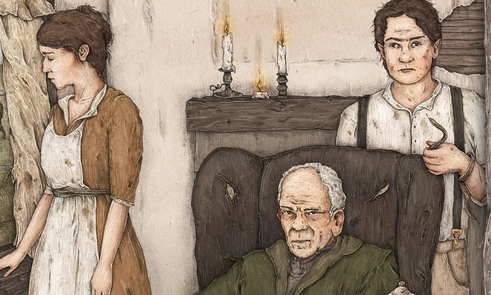
Which is why we can assume confidently that he had a child before he took his life. Nobody knows what happened to the orphaned child, but I think that whoever it was stayed in the area because Lord Voldemort’s ancestors, the Gaunts, lived in Little Hangleton. The reason I suggest Cadmus left a letter with his child is because Marvolo Gaunt, 1890s – 1920s, was aware of being a descendant of the Peverell family.
|
“And you think we’re scum, do you? Scum who’ll come running when the Ministry tells ’em to? See this [ring]? Centuries it’s been in our family, that’s how far back we go, and pure-blood all the way! Know how much I’ve been offered for this, with the Peverell coat of arms engraved on the stone? See this [locket]? Salazar Slytherin’s! We’re his last living descendants, what do you say to that, eh? So! Don’t you go talking to us as if we’re dirt on your shoes!”
– Marvolo Gaunt (Half Blood Prince Ch. 10) |
Marvolo identifying the “Peverell coat of arms engraved on the stone“ inside the ring suggests that he might have heard stories about the Peverell family, which could have been passed down from Cadmus’ child.Since the ring was the Resurrection Stone.
More Nommy Thoughts
At some point between the 1200s and the 1500s, a female descendant of Cadmus married into the Gaunt family, changing the family name from Peverell and intertwining their blood with that of Salazar Slytherin’s descendants.
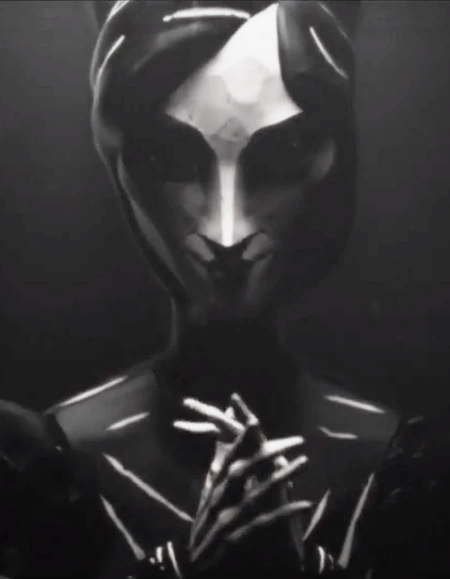
Gormlaith Gaunt
|
JK Rowling confirmed the Peverell’s are NOT descendants of Slytherin, the Gaunts are. The Peverell’s were married into the Gaunt family, we just don’t know when. In 1576, a descendant of the original Gaunt family, Gormlaith, murdered her sister, Rionach, and kidnapped her niece, Isolte Sayre, because she didn’t approve of sister raising her niece to be accepting of non magic people.Isolte later escaped and came to America where she established
|
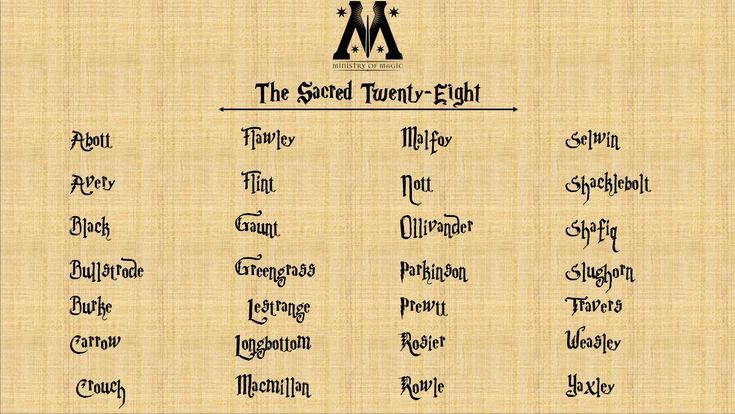
(The Gaunt family was later listed in the Pure-Blood Directory from the 1930s as being one of the “Sacred Twenty-Eight” families who stayed true to “pure-blood status”.)
|
|
Dumbledore tells Harry that Marvolo, Morfin and Merope were the last in the line of the Gaunt family, so somehow the Gaunt family immigrated from Ireland to Little Hangleton sometime between the 1500s and the 1800s when Marvolo was born.I have a strong suspicion that Corvinus Gaunt, late 1700s – 1925, is the grandfather of Marvolo Gaunt, because he’s the one who found the Chamber of Secrets the first time and incorporated the trapdoor entrance into the plumbing of a new bathroom that was built in the 18th century.
|

|
I believe Voldemort found out about the entrance to the school the summer after his 6th year when he went to Little Hangleton to find Marvolo. The math here lines up that it could actually have been Marvolo who told him where the entrance was and how to open it because Marvolo was a fanatic of Slytherin and probably didn’t want those secrets to die with him. Especially if Corvinus really was Marvolo’s grandfather.

|
What’s very interesting to me is that Corvinus and Marvolo are reported to have died around the same time. Corvinus died in 1925 and Marvolo died between December 1925 and 1928.
|
Another question here is where Corvinus came from, because Gormlaith and Rionach are the only other Gaunt descendants we know about. Was Corvinus a descendant of Gormlaith and Rionach’s father’s sibling, maybe?Granted, there’s no evidence anywhere of this, but there would have to be since there’s no record of Gormlaith and Rionach having another sibling to pass on the name.
|

Gormlaith Gaunt and Isolte Sayre-Steward
|
And as far as we know, Isolte never used the Gaunt name.
Final Delicious Thought
In a fascinating twist, the Peverell brothers crafted artifacts that contradict themselves.
|
The Elder Wand boasts “unparalleled potency,” rendering its possessor nearly invincible. With a thestral hair core and constructed from elder wood, this wand, alternatively dubbed ‘the Deathstick’ and ‘The Wand of Destiny,’ has been a catalyst for significant conflicts among the Wizarding World. Contrary to its formidable reputation, however, the Elder Wand raises questions about its actual efficacy in ensuring victory due to its magical origins. Thestrals, commonly regarded as messengers of death, actually embody a serene disposition that is harmless to wizards. Mythologically intertwined with visions, prophecies, and dreams, the notion that encountering a thestral in a dream foretells prosperity offers quite a contradiction to their perceived role in creating such a violently magical artifact.

The Resurrection Stone tempts with the promise of reuniting with lost loved ones, yet its power carries a price. Those resurrected are mere shadows, not fully alive, harboring a disdain for the very act of resurrection. This twist challenges the anticipated joy of reunion, introducing an unexpected discord within its seemingly benevolent purpose. In stark contrast to the Stone’s promise, thestrals epitomize peace, wisdom, and level-headedness. The harmony attributed to these creatures stand in contradiction to the Stone’s power to disturb the natural order by summoning spirits against their will. Bringing someone back from the dead disrupts the tranquility and innate wisdom associated with thestrals.

The Invisibility Cloak is a creation woven from pure thestral hair, promising the wearer absolute invisibility, even from Death itself. Yet, the very essence of the Cloak, while tempting, introduces a profound contradiction. The act of hiding from Death, circumventing the natural order, disrupts the delicate balance that governs life and mortality.Thestrals, associated with visions and wisdom, stand as reminders of forces guiding and protecting. However, they also represent confronting life’s challenges directly, advocating for a natural and unhidden approach to the complexities of existence. The Invisibility Cloak, with its enchanting power of concealment, echoes a desire to evade the inevitable, while the thestral urges a more courageous path, emphasizing the wisdom in facing life’s issues without hiding behind a veil.

|
With these thoughts, an intriguing notion surfaces: what if the true criteria for claiming ownership of the Deathly Hallows lies not in the readiness to inflict harm but rather in the acceptance in facing one’s own mortality?This suggests that mastery over Death comes not from the willingness to kill, but from an unwavering acceptance of one’s own vulnerability. In this alternate interpretation, the mastery of each Hallow is intimately tied to the mastery of essential aspects of the human experience.
|
In this reinterpretation of the Deathly Hallows, mastery of the Elder Wand focuses around the acceptance of one’s own mortality. The true master of the Elder Wand is not merely the one who seeks power through domination and violence but rather the individual who confronts the inevitability of their own mortality with courage and wisdom. Mastery is found in the acknowledgment that power, even of the magical caliber possessed by the Elder Wand, is fleeting and secondary to the profound understanding of life’s impermanence.
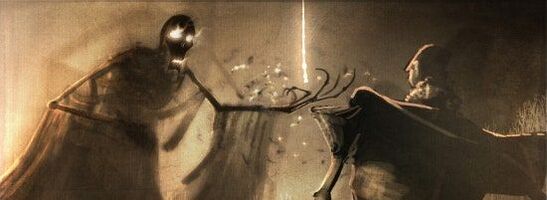
Mastery of the Resurrection Stone becomes contingent not upon the pursuit of eluding death or bringing back the departed, but rather on the capacity of living with the wisdom of those who have passed on.The true master understands that the Stone’s power lies not in evading the natural order, but in embracing the memories and legacies of those who have come before. To navigate the delicate balance between the connection with the departed and the wisdom to acknowledge the irreversible. It is an intimate journey of coming to terms with the transient nature of life and, in doing so, finding solace in the enduring echoes of the past.

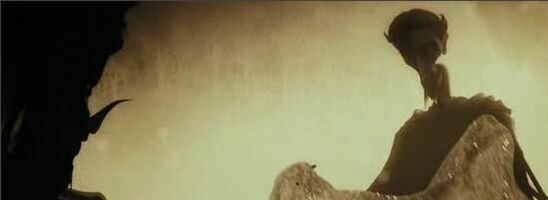
Finally, to master the Invisibility Cloak is not a mere act of hiding or avoiding the inevitable, but a true understanding of the value of being present in life.The true master of the Cloak recognizes that invisibility is not a shield against mortality but a tool to navigate the complexities of existence with humility and grace. The cloak symbolizes the wisdom to move through life quietly and to engage with the world authentically, appreciating the fleeting moments and embracing the beauty. It lies not in eluding death but in using the cloak as a vessel for contemplation, reflection, and an acknowledgment of the transient nature of our journey through existence.
|
In this reinterpretation, the Deathly Hallows go from symbols of trickery and deceit to symbols of existential understanding; conduits through which individuals navigate complexities of life, death, and the enduring human spirit.Until next time, may your wands stay at the ready, and may your curiosity remain as boundless as the magical realms we’ve explored together.
Do share your thoughts with me!All my love,
– The Researcher –
– The Researcher –
 Myths & Mischief